Review
Anachrony of Curse. On "Los grupos y otras revueltas artísticas" at the MUAC
Reading time
8 min
Dedicated to Ana María Martínez de la Escalera
Recently Cristina Rivera Garza presented at UNAM and spoke about the power of the curse, and its effects — not only when it is cast, but in its continuation toward the future, because: "As long as justice is not served, the victim and the perpetrator will remain bound together by the harm."¹ In Mexico we are heirs to the accumulation of abuse that has found its implosion in slogans hurled against the various governments responsible for violence and repression against the political mobilizations of farmers, workers, and students. Los grupos y otras revueltas artísticas. Redes y colectividades en México 1976-1985 could be thought of as a political form of the curse, materialized in forms of organization and a heterogeneity of responses against the legacy of anti-communist political persecution—known as the Dirty War—which left its deepest marks in the 1968 massacre and the use of paramilitary groups in the repression of 1971.
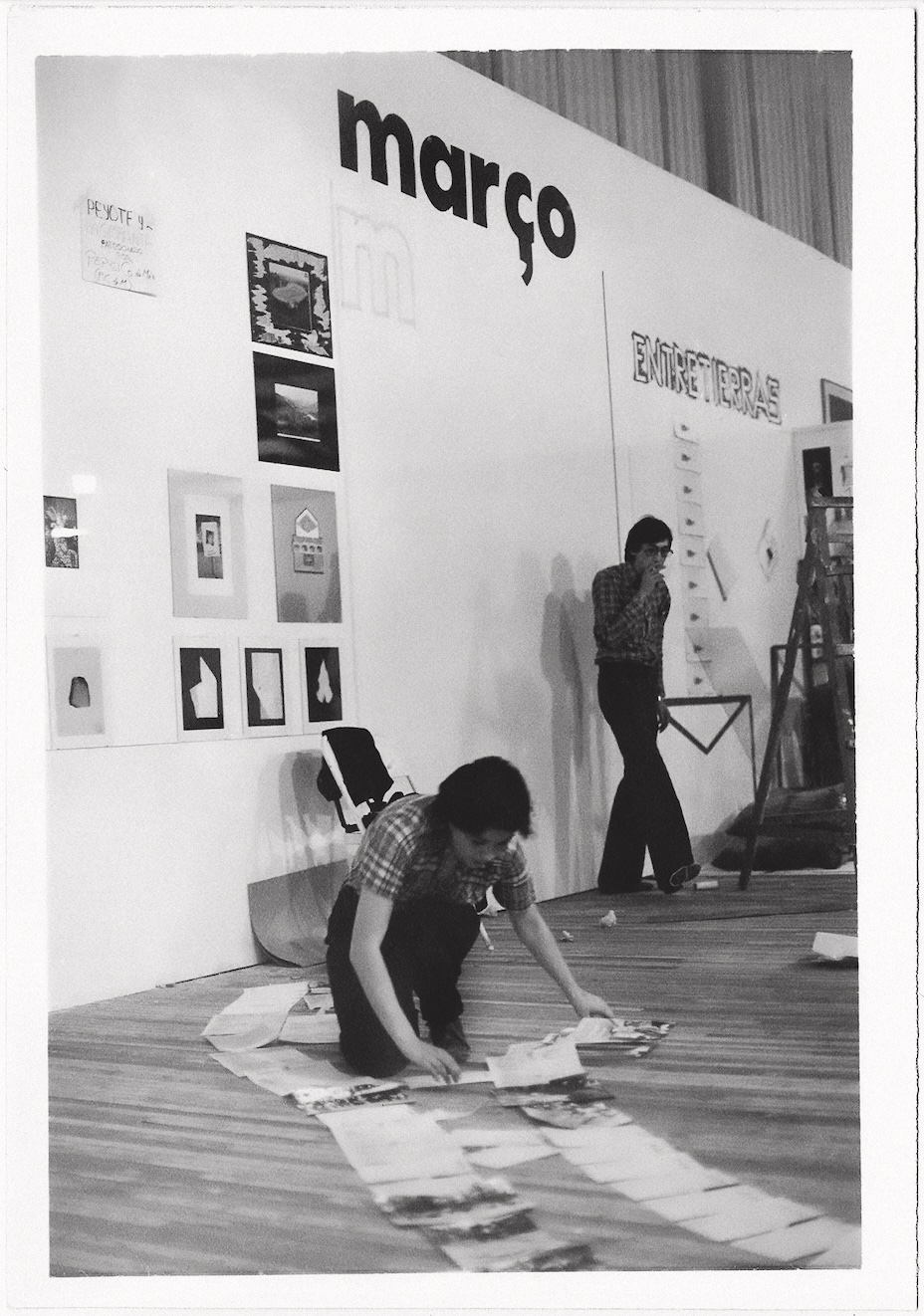
Drawing on a substantial collection from the MUAC Fund and the Arkheia Documentation Center, the exhibition curated by Mónica Amieva, Pilar García, Julio García, Jaime González, and Daniel Montero, in collaboration with the seventh generation of the Curatorial Studies area of the master's program in Art History (UNAM), brings together installations, works, manifestos, minutes, artistic projects, catalogs, colloquium programs, and correspondence that reconstruct the paths along which at least 28 artistic groups encountered one another. This exhibition also consolidates the role of the MUAC—and its predecessor the MUCA—as archivist of the history of contemporary art in Mexico and of its power in the selection and conservation of this archive.
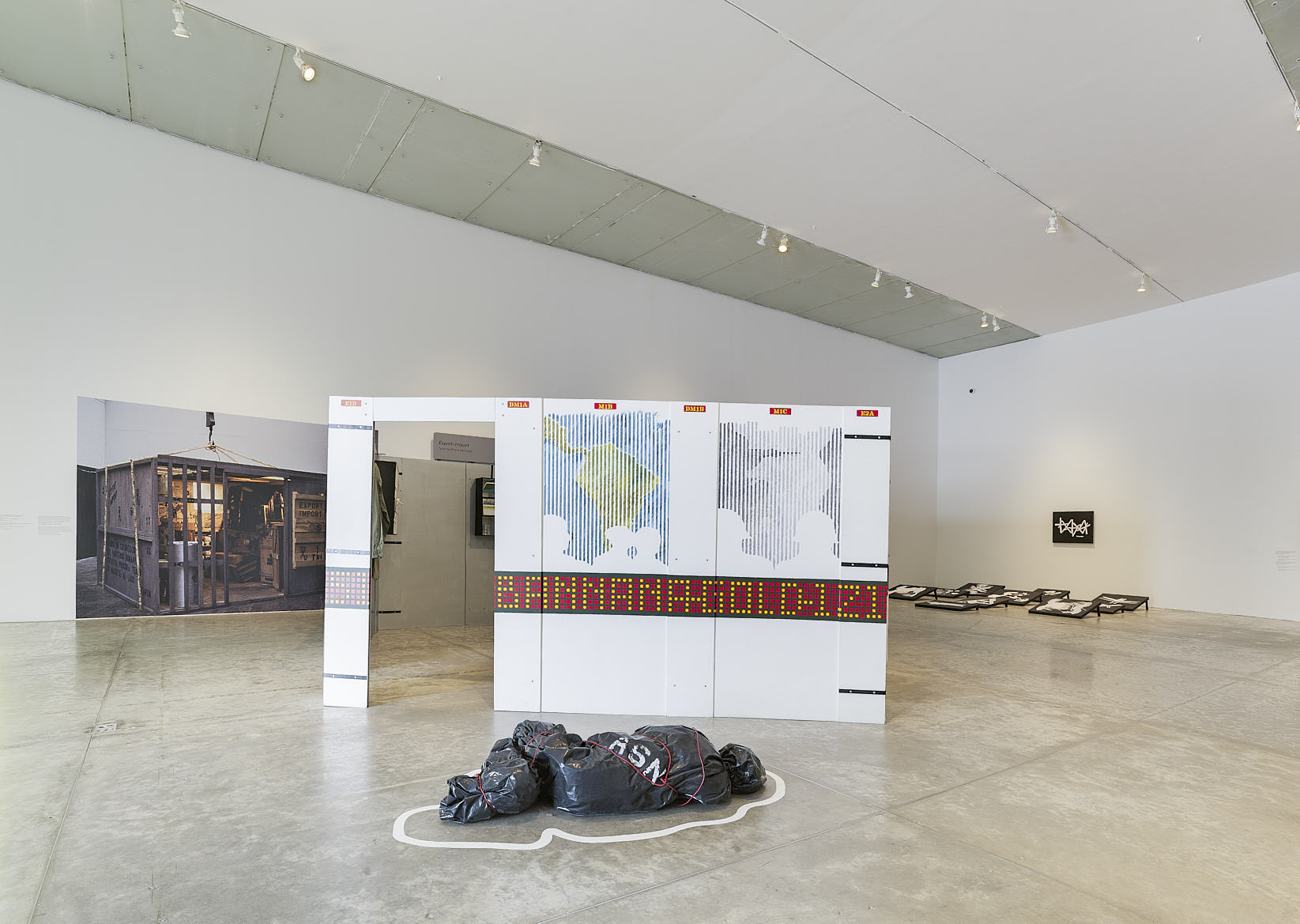
The exhibition's narrative begins with the 10th Paris Youth Biennial which, since its founding in 1959, had until 1977 a Latin American pavilion in which four Mexican groups participated, plus one: "Grupo Códice," identified by Alberto Hijar and the other collectives as a group hand-picked by the Mexican and Uruguayan governments. Controversies of this kind are documented in letters and newspaper articles, showing that the processes of negotiation with the major art biennials have always revolved around institutional control and recognition. The decision to begin the narrative of the groups with an international gaze offers a reading in which exhibitions abroad have historically functioned as a device that causes the nominal act of "being an artist" to take effect on the national territory. Working under that critique is the installation Export-Import by the Taller de Arte e Ideología, presented here only as documentation, which shows how the curse of extractivism operates across Latin American territories. Perhaps the most valuable outcome of that process of exporting to Paris was the creation of the Frente Mexicano de Grupos Trabajadores de la Cultura, where collaborations were woven that assumed a more explicit position of the artist as a cultural worker with aesthetic tasks within workers' and farmers' political movements. This Frente organized the international graphic exhibition América en la mira(1978), commemorating the coup d'état in Chile and publicly calling for participation in a show that would reject no work, thus managing to bring together diverse artists through the circulation of their graphic production.
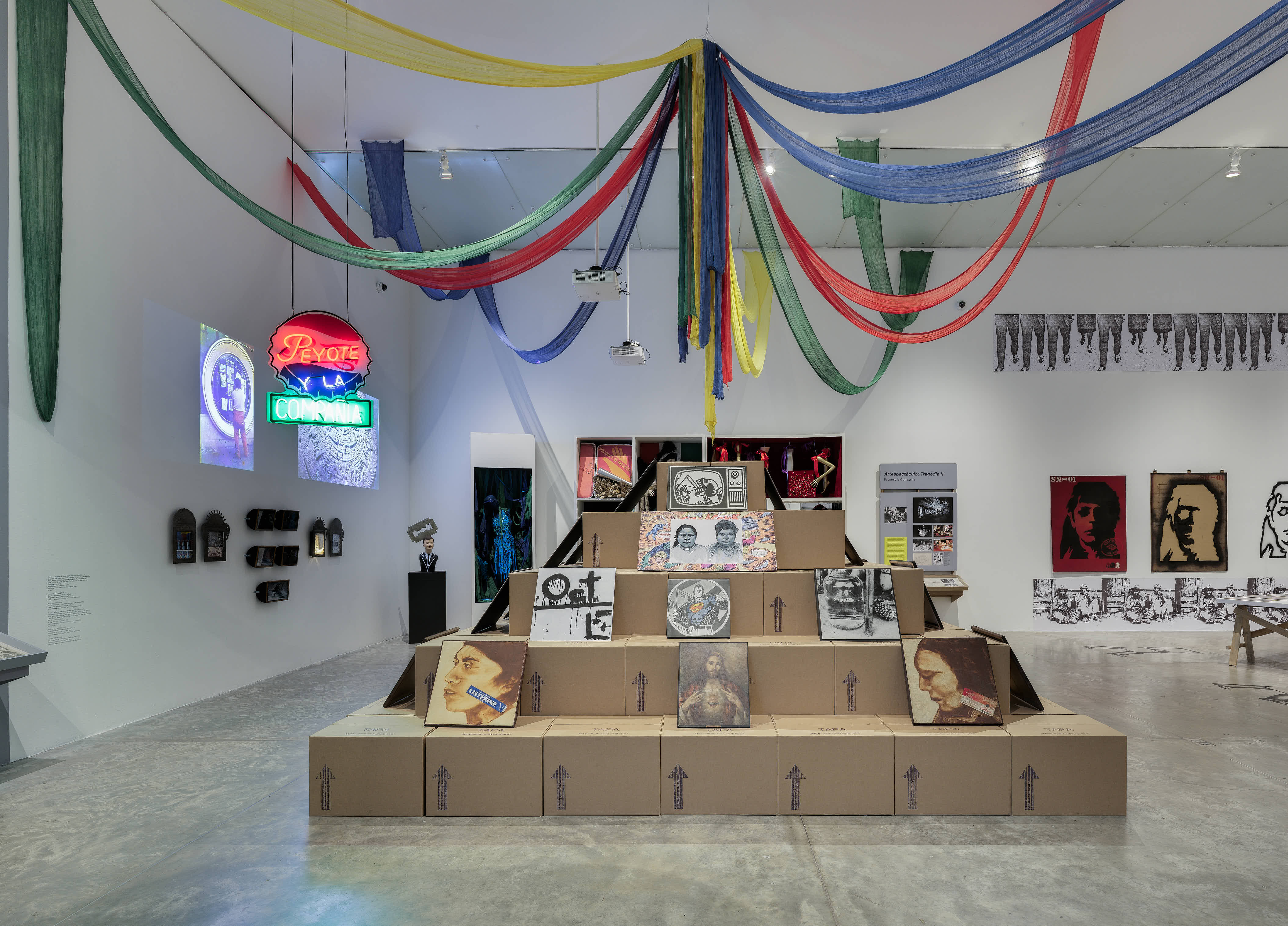
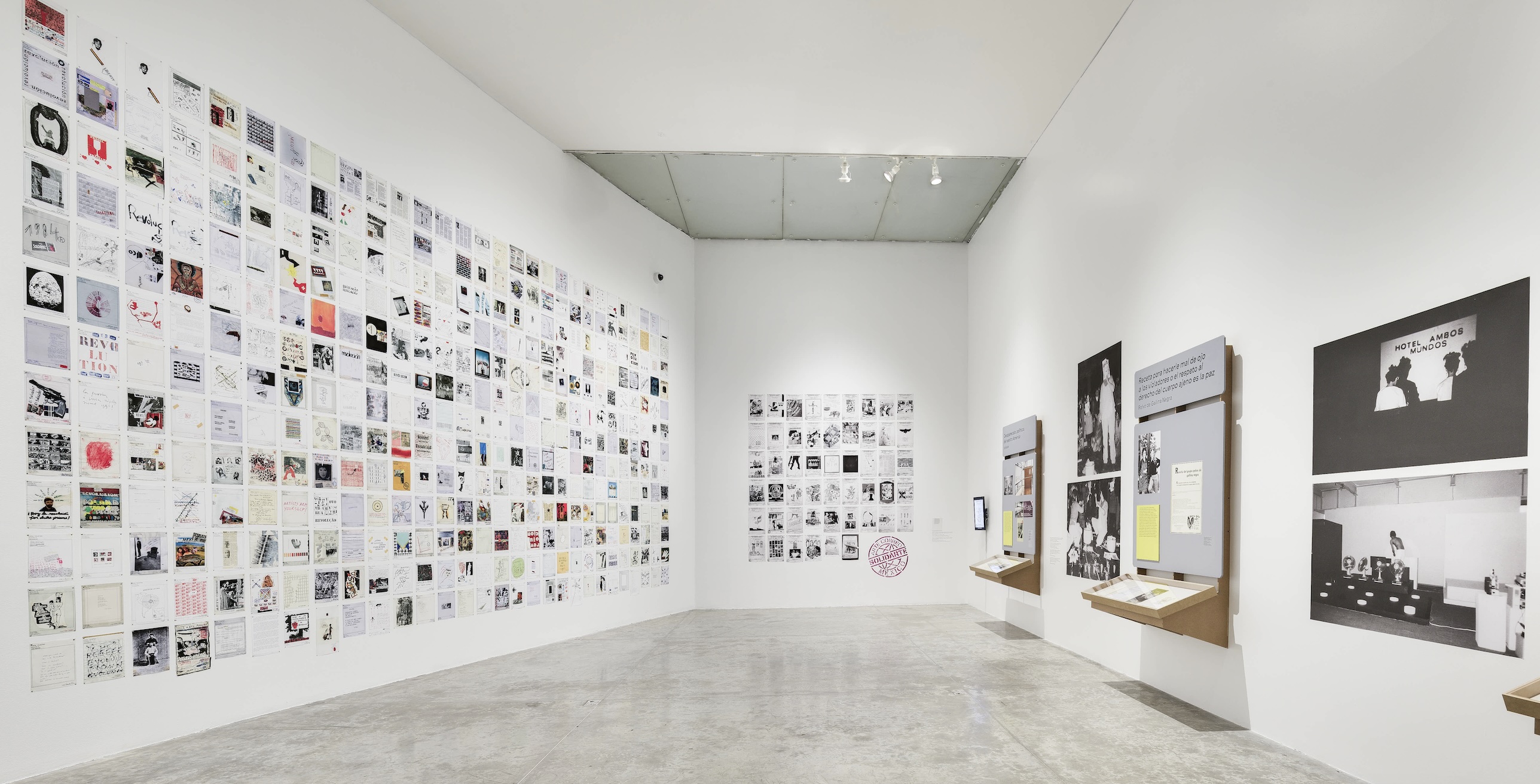
Within the groups, a political form of the curse was produced that placed their work at the disposal of the streets and the revolts. They managed their own displacements within institutional frameworks such as the Sección Anual de Experimentación (1979), in which Grupo Suma participated with the installation La calle, which they destroyed after winning the grant awarded by INBA. This is a collective work ethic that rehearsed various aesthetics, ideals, and wagers—as in the manifesto of Grupo Tetraedro. They also brought humor, the reclaiming of popular culture, and irreverence into play, as did No-Grupo, as well as the anti-imperialist Mexican pop of Peyote y Compañía. There also emerged an ethic of commitment to the defense of the neighborhood, from groups like Tepito Arte Acá, which from 1973 was already producing artistic work directed toward urban territorial struggle. An ethic of self-publishing emerged as well—not made explicit in the exhibition, but very important as a form of network-building and circulation of artists' books—with projects such as: El corno emplumado (1962–1969); Beau Geste Press (1972–1976); Ediciones La Cocina (1977–1993); Paso de peatones (1978–1980).² Long live self-publishing movements!
In a turbulent 2026, this exhibition reminds us that curses remain active. It shows the importance of appropriating the institutional narratives that produce their own legitimation by expropriating the work of artists and groups from the so-called global south, who give their time, work, and lives to participate in both local and international exhibitions—but also, in some cases, through articulation with political struggles. That is why gestures such as the publication of the counter-catalog are important: seized by the Uruguayan embassy in Paris, it was produced by the Mexican groups during the 10th Paris Biennial to appropriate the narrative that sending artists to represent a region traversed by censorship and political persecution entailed. Thus the curse of the major international exhibitions has been prolonged—exhibitions that seek to display the revolt of convulsive territories, but without the complexity of their artists, as documenta 15 anticipated, along with the genocidal complicity that cultural institutions in Germany currently maintain.³
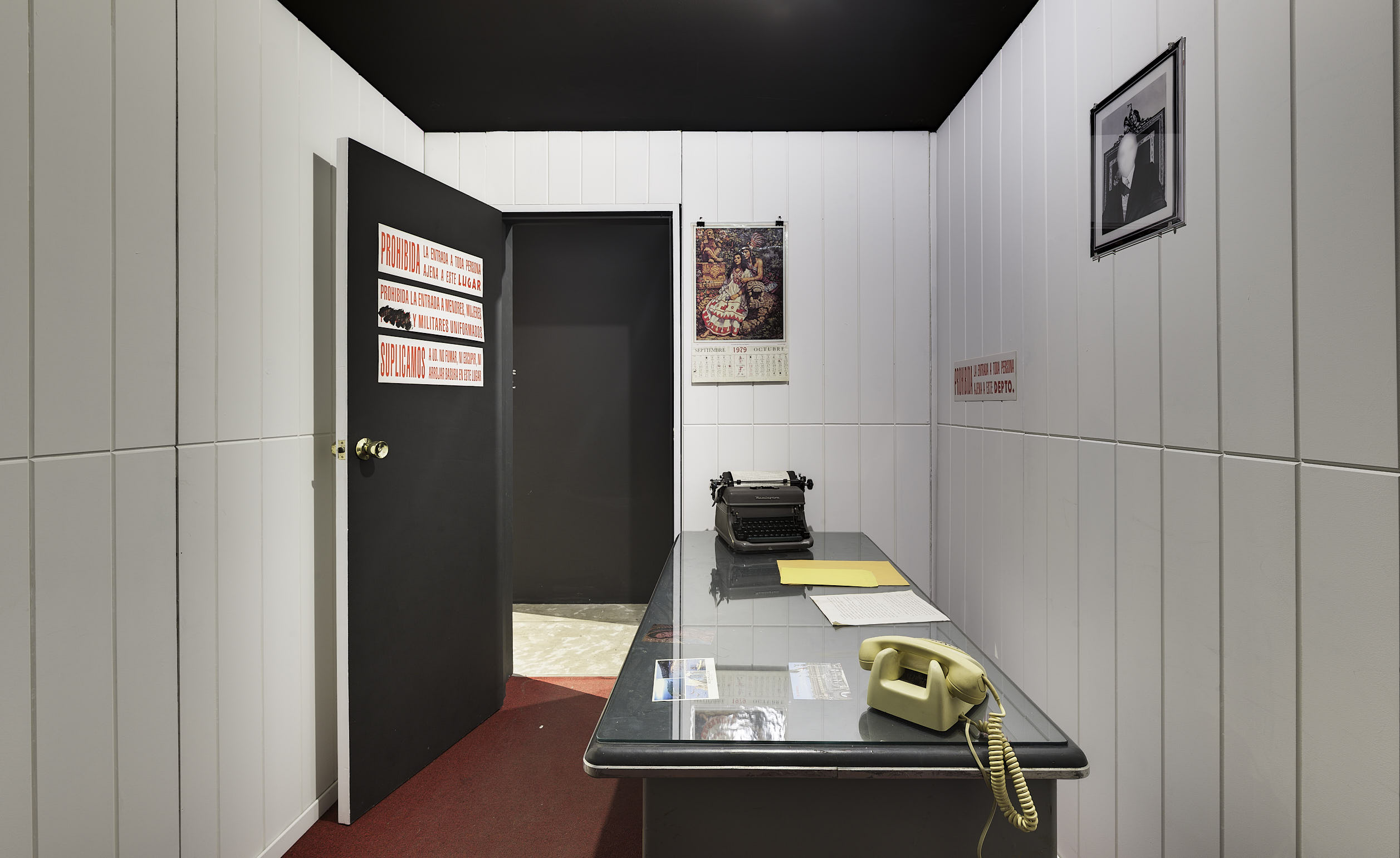
Los grupos is also a dialogue with the present, insofar as enforced disappearance continues to be exercised in this territory, under other technologies of violence and with other agents, but with the same state impunity. The installation 1929: Proceso shows the administration of torture carried out by military and police, signed with the year in which the PRI was born. With a 1979 calendar hanging on one of its walls, it invokes not only the year in which the installation was made, but two other events: in Mexico, the creation of the Frente Nacional Contra la Represión; in Argentina, the phrase uttered by dictator Jorge Rafael Videla, who defined the legal status of his victims as: "They are neither dead nor alive, they are disappeared."
One of the curses this exhibition continues to carry is the little space given to feminist collectives. While we can find the audiovisual pieces of Colectivo La Revuelta, Taller de Cine Octubre, and Colectivo Cine Mujer, exhibitions such as "Coordenadas móviles: Redes de colaboración entre mujeres en la cultura y el arte (1975–1985)" (Museo Carrillo Gil, 2023) and "Radical Women: Latin American Art, 1960–1985" (Hammer Museum, 2017) have shown that it is possible to reverse the condemnation that, since 1983, Polvo de gallina negra was already issuing: "because of a history written with sexist prejudices, there are almost no women in the historical documentation of art."⁴ This could help us understand, for example, why at the 10th Paris Youth Biennial, of the 51 artists presenting their work in the Latin American pavilion, only 8 were women. A debt remains to the networks of women who from that time were already denouncing sexual violence at the national level and within the art scene, and who exercised various tools such as self-publishing in print, audiovisual, and also performance form, as in La fiesta de quince años (1984).
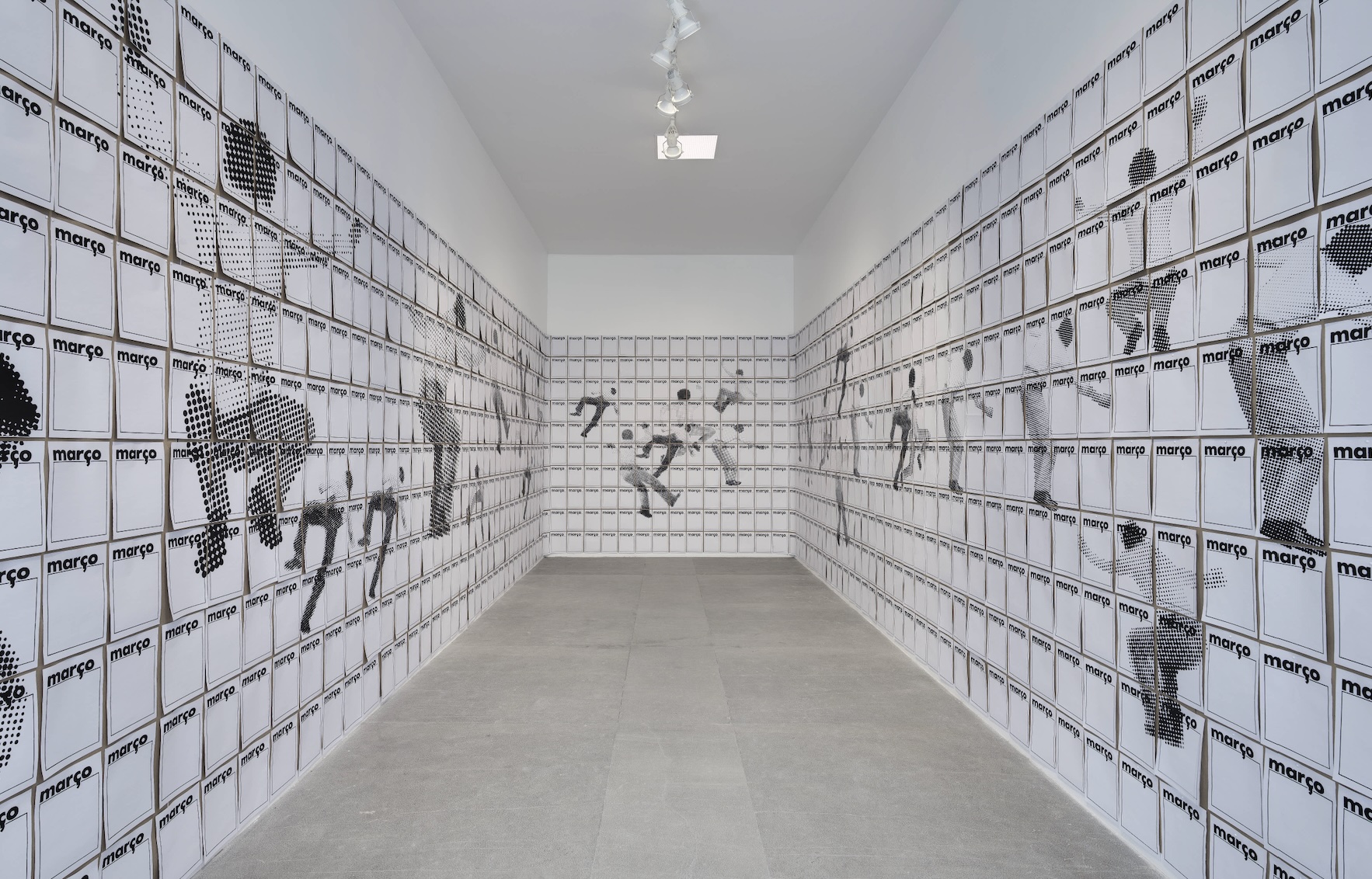
As someone who has at this moment decided to stop participating in activism and art collectives, this exhibition cuts through me with the question of how endings are narrated and documented—both the endings of the individuals who pass through them and of the collectives themselves. Beginnings and endings pass through a great number of affective and political connections that leave their trace in the intimacy of archives; hence the generosity of this exhibition, which is composed largely of them.
Sometimes I feel trapped in a curse that extends from the anachrony (the same slogans, the same struggles). I do not know when it will stop, or if we will ever cease to shout: "Van a volver, van a volver, las balas que disparaste van a volver, la sangre que derramaste la pagarás, el pueblo al que asesinaste no morirá ¡NO MORIRÁ!" ⁵
Translated into English by Luis Sokol
1: Cristina Rivera Garza, “Cuando la mano feroz de la impunidad te roza la piel”, 13 de abril 2026, Sala Miguel Covarrubias, CCU, UNAM, ver: https://www.youtube.com/watch?v=XqQJis-vlMo
2: La era de la discrepancia, p. 170-191.
3: In which Mexican collectives also participated, such as Radio Nopal, Radio Cocina Colaboratorio, Cráter Invertido, and Erick Beltrán in his lumbung press ensemble, among other stowaways who were able to attend thanks to the openness and joyful resistance of Arts Collaboratory and ruangrupa. Cfr. https://postfilia.com/2022/07/24/imagenes-publicas-imagenes-privadas/
4: Cfr. Conference-Event: “Las mujeres artistas mexicanas o se solicita esposa”
5: They will return, they will return, the bullets you fired will return, the blood you spilled you will pay for, the people you murdered will not die — WILL NOT DIE!
Published on Jun 26 2026