Reading time
6 min
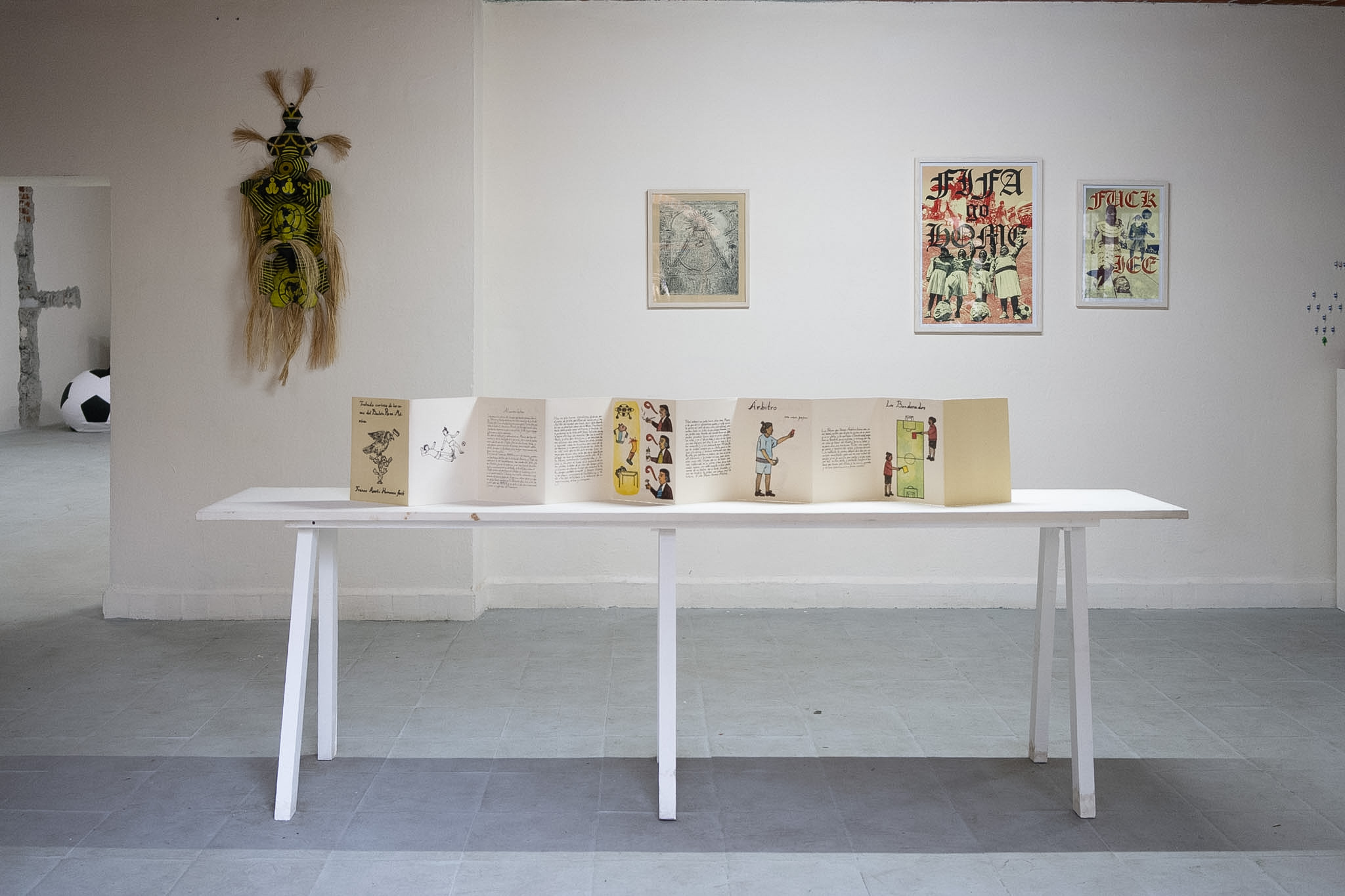
The Football World Cup in Mexico was sold to us on the promise of modernization and national celebration. While the latter is still underway, rather than projecting stability and prosperity for the country, it has thrown into sharp relief the fractures and griefs we have been building up as a society in recent years. In that spirit, the current collective exhibition at La Quiñonera, Anti FIFA Fan Fest: Al balón le vale m*dres [Anti-FIF4 Fan Fest: The ball doesn’t give a d*mn]—organized by the collective MalPaís and curated by Patricio García Formentí, Mario Stoylov, and Ana Sofía Esteva—uses the World Cup as a starting point to dissect the political and social symptoms that the spectacle attempts to conceal by all means available.
Unlike the dozens of exhibitions the World Cup has generated in Mexico City, this project is not really about "art and football" as its subject matter, but rather an exercise in the recovery and politicization of the public. The curators understand it as a cultural device that produces, mediates, and condenses meanings. In that vein, the works that make up the show should not be viewed as a collection of objects about football, but as the sum of griefs and denunciations that converge around the World Cup: precarity, dispossession, and systemic violence.
In this case, speaking of the presentas a category of analysis is especially useful, since this exhibition disputes its narrative with FIF4. Mexico is traversing a critical juncture marked by inequality, violence, and a complex geopolitical landscape—genocides and interventionist threats. Faced with this, FIF4 does not merely organize a tournament; it produces a narrative about our time. It seeks to impose a temporality of celebration, consumption, and consensus—one that this project attempts to oppose. Following Giorgio Agamben, the "contemporary" is one who does not entirely coincide with their time nor adapt to its pretensions, and it is precisely that distance that allows them to map it with lucidity. I find that gesture in the curatorial proposal: against the "present" of euphoria staged by FIF4, the pieces introduce an anachronism—that of national pain. In doing so, they confront the sporting body and other agents that sustain the same institutional narrative: government, television networks, betting houses, and megacorporations.
Mario Stoylov notes in the curatorial text: "Whether we like it or not, football is with us, it is part of this curious adjective attached to art: the contemporary. Football is also in or with time. It is not in a place, for in existing in a time, it is everywhere. (…)." Rather than turning football into an object of study, the show uses it as a condenser of different temporalities. Under this premise, each work embodies different social symptoms—many of them urgent and difficult to digest.
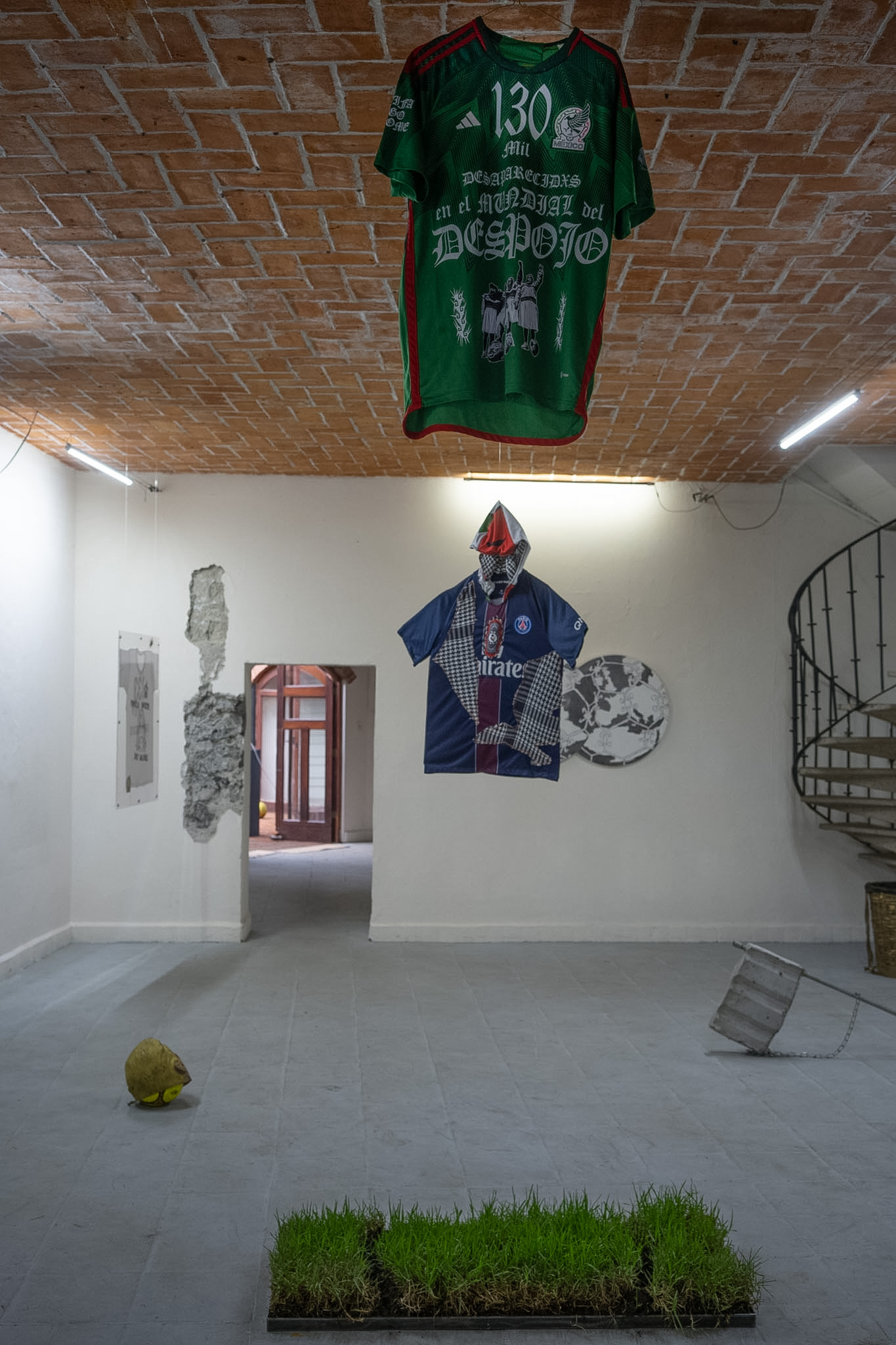
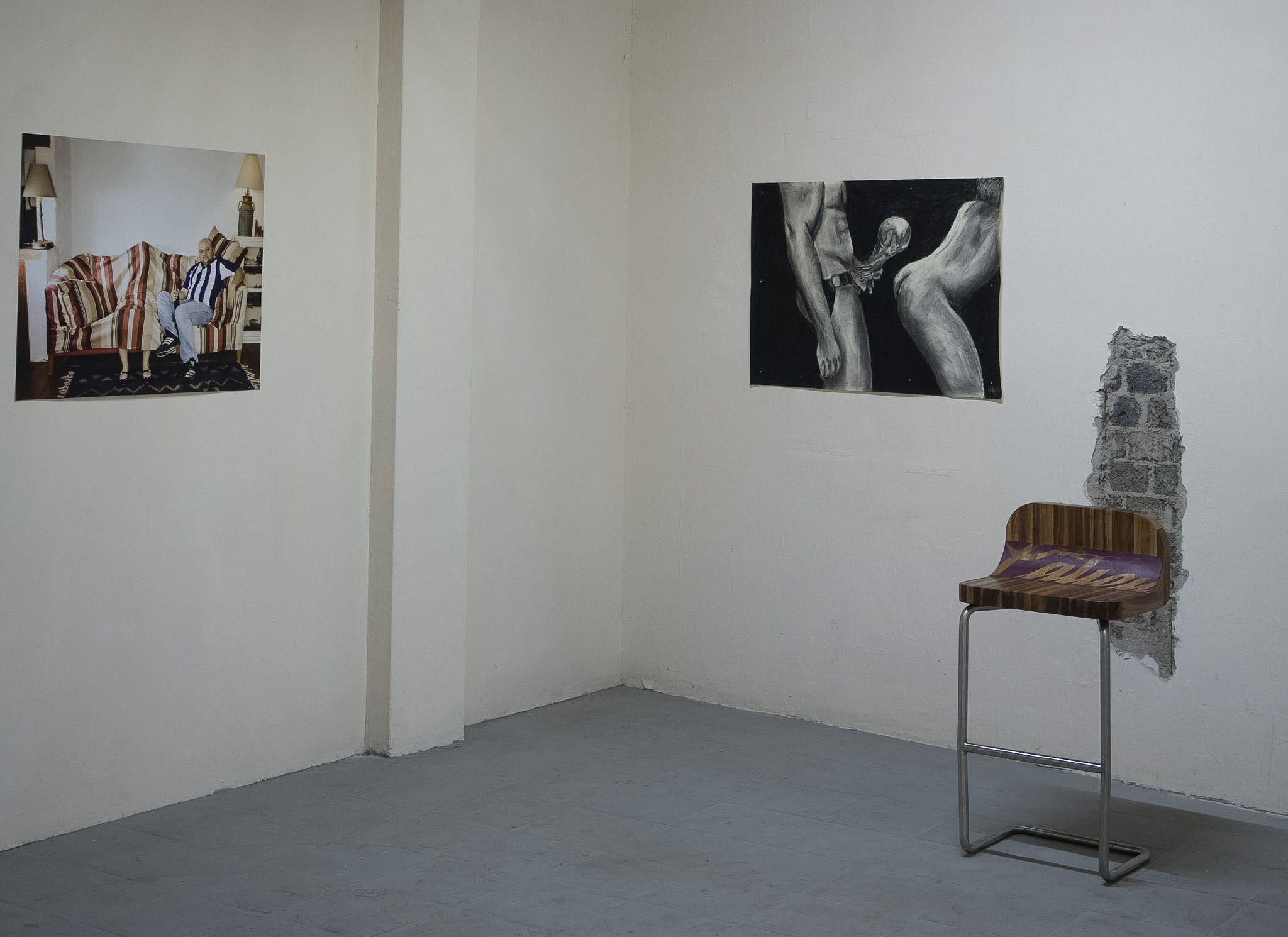
Concerns around gender violence are present in works such as ¡Quieres más a tu pinche pelota que a mí! by León Chavez and Guardapolvos by María Ezcurra. Both capture domestic fragments of the traditional Mexican family, where football shapes the household equally through joy and through terror. Likewise, the crisis of the disappeared erupts with rawness in the jersey of a searching mother, +133 desaparecidos, presented by Elsa Oviedo, and in Lo que en verdad importa by Gerardo Olivier—a cardboard Estadio Azteca functioning as a civilian ossuary covered with the records of disappeared persons. Placing these testimonies at the center of the gaze produces dissonance, a gap that for those being named means more time.
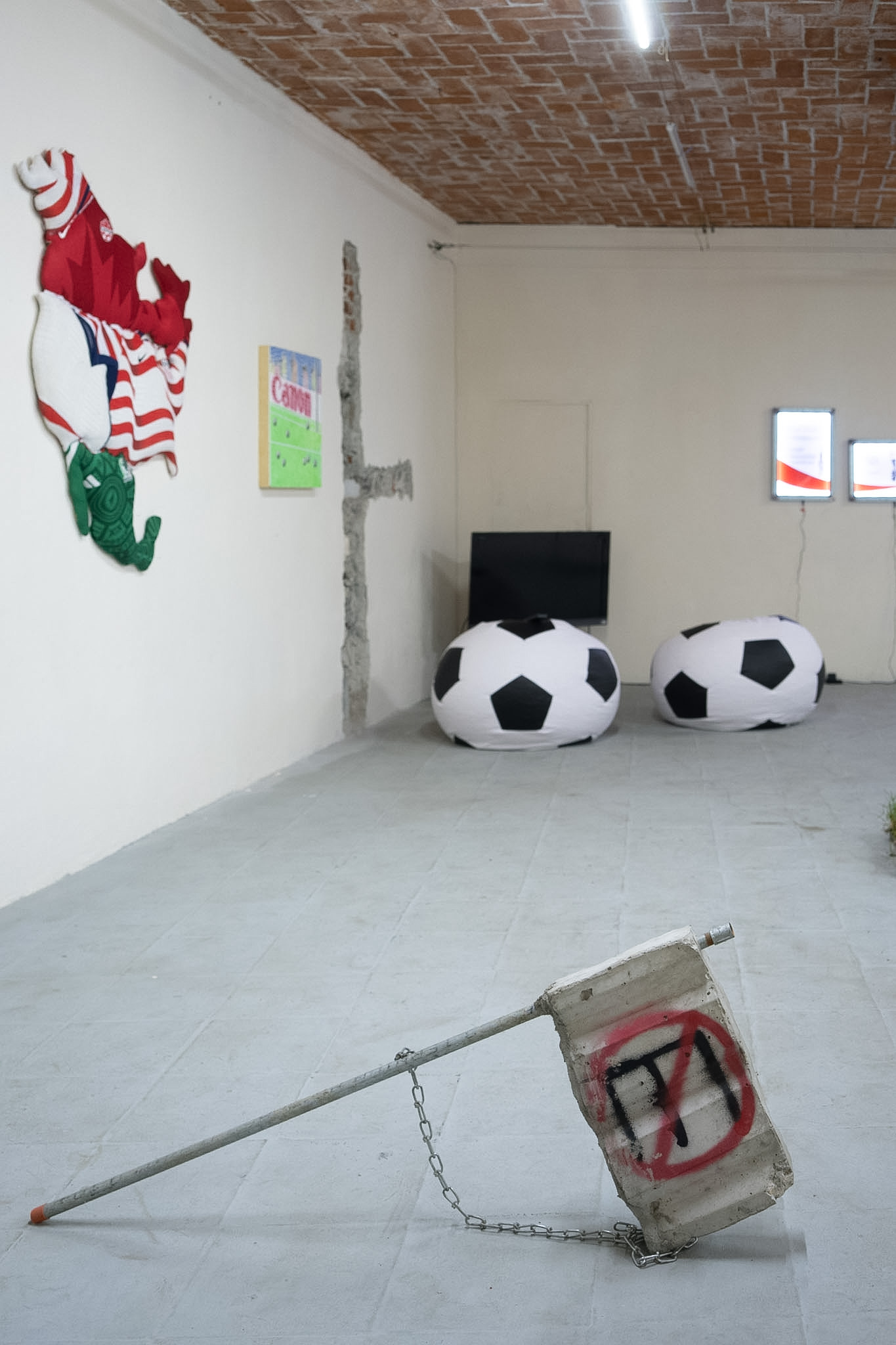
There are also symptoms expressed in works that address football tangentially, but whose presence is fundamental because they broaden the critical horizon from which the exhibition maps the present. Such is the case of Resquicios del paisaje by Arantza Hernández, an installation of earth and natural grass that reflects on the retractable system of the new Estadio Santiago Bernabéu and how, through its trays, it allows grass to be stored and preserved underground to maximize its performance. Rather than speaking directly about football, the work shifts the focus toward the infrastructure that makes it possible, exposing a logic of the domestication of nature. There are proposals that contain no references to football whatsoever and yet, within the exhibition's context, are allowed to acquire that resonance and amplify other works. For example, Bandera de estacionamiento de alta calidad, tecnología alemana by JOS SML, where the concrete and rebar structure evokes the remains of failed urban modernization, ultimately reinforcing a visual imaginary of the reappropriation of public space.
That said, this map of pronouncements is not without risks. In some pieces the denunciation is so direct that it risks being fetishized. When it is enough to name the injustice for a work to be considered accomplished, it ceases to operate as an instrument of thought and becomes an object of moral consumption—a simulacrum that the ideologically aligned spectator recognizes and approves without it generating any questions. This results in pieces that fall into "revolutionary" Manichaeism, using iconography from communist regimes and militant organizations that, by 2026, should already be revisited by the new left—not because of their origins, but because of their verticalist drift.
These individual biases—applicable to certain proposals—do not, however, diminish the power of the whole. In the end, we could say they are also a symptom: there are cultural agents who feel the need to politicize themselves not out of a critical impulse, but because they have learned it as a legitimizing dynamic. In any case, by including them, the exhibition successfully maps a complex present.
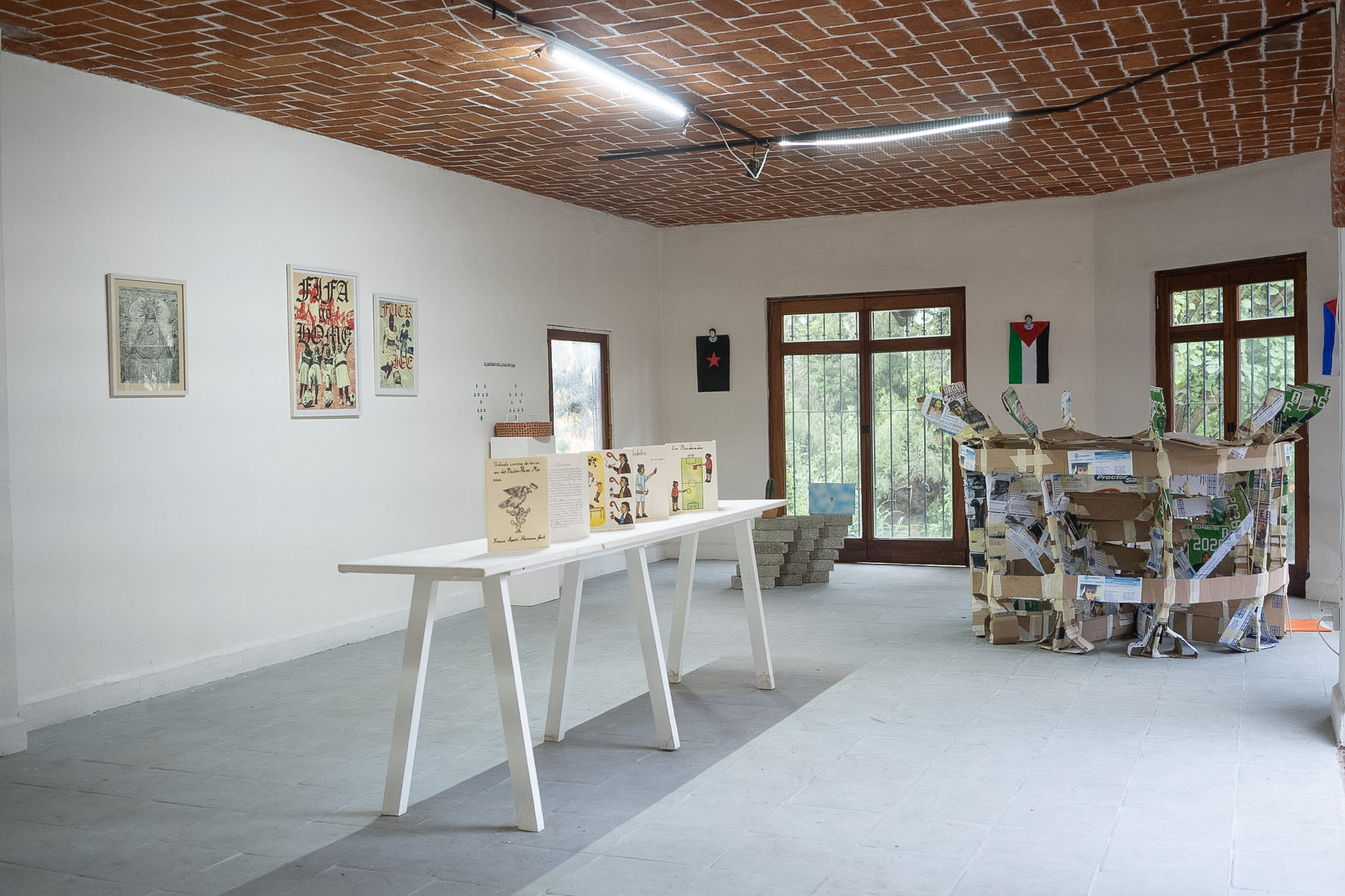
That the show takes place at La Quiñonera is a fundamental political positioning, since this space has been characterized by generating proposals around communities beyond the art circuit. From that place of enunciation, the exhibition makes visible what the official narrative attempts to conceal, and turns that concealment into an opportunity to exist from the margin. For this reason, the value of Anti FIFA Fan Fest does not reside in grouping transformative political discourses, but in making the tension visible between the multiplicity of them. In none of them is football posed as a solution or remedy to pain; the exhibition is clear on this and uses it instead as a means to insist that this pain weighs and persists.
For that very reason, it would be a mistake to judge this show by the positions of specific artists rather than by what it actually achieves: opening an uncomfortable, horizontal, and necessary space. Moving through the exhibition and participating in its weekly activities constitutes a key political operation for stretching its anachronistic momentum. It is pertinent to inhabit these kinds of spaces because, beyond contemplating art, it implies interrupting the flow of institutional narratives—corporate, governmental, and cultural—and continuing a dispute over the present.
Translated into English by Luis Sokol
Published on Jul 10 2026