Reading time
4 min
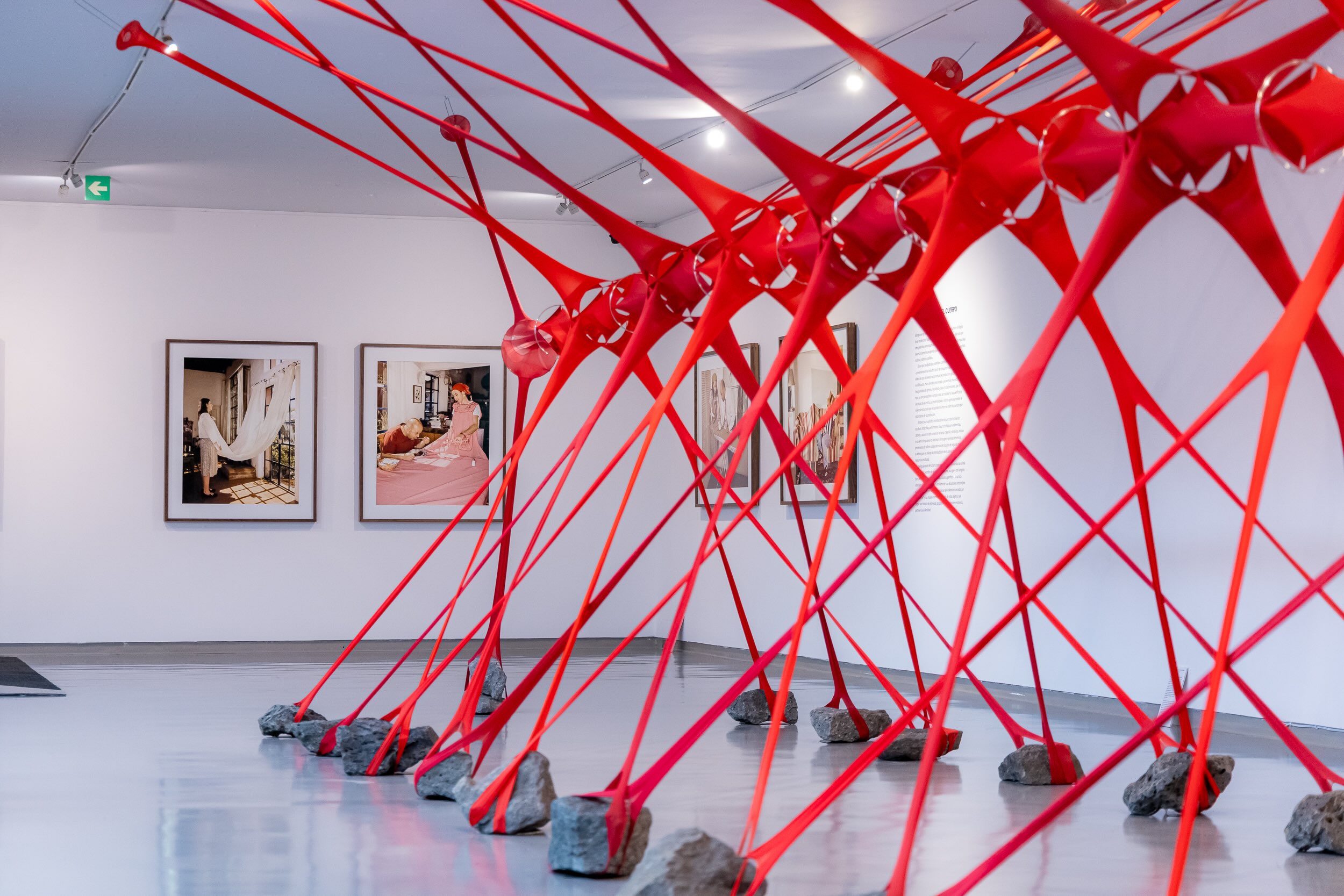
I was walking hand in hand with my mother the first time I visited Líneas de fuga by María Ezcurra at the Museo de Arte Carrillo Gil. It was a Saturday around lunchtime and the room was empty except for the large, strident textile bodies in tension, the pile of shoes flying like a flock of birds, the house made of suitcases, and the quinceañera dresses suspended in waiting. The show is Ezcurra's first retrospective and caught my attention from the start for the versatility of formats and thematic axes that run through gender, migration, ecology, and the symbolic languages of materials. It is in this last point, however, where I find the genius of her work and the capacity to evoke sensations so personal and situated that they captivate and disturb at once.
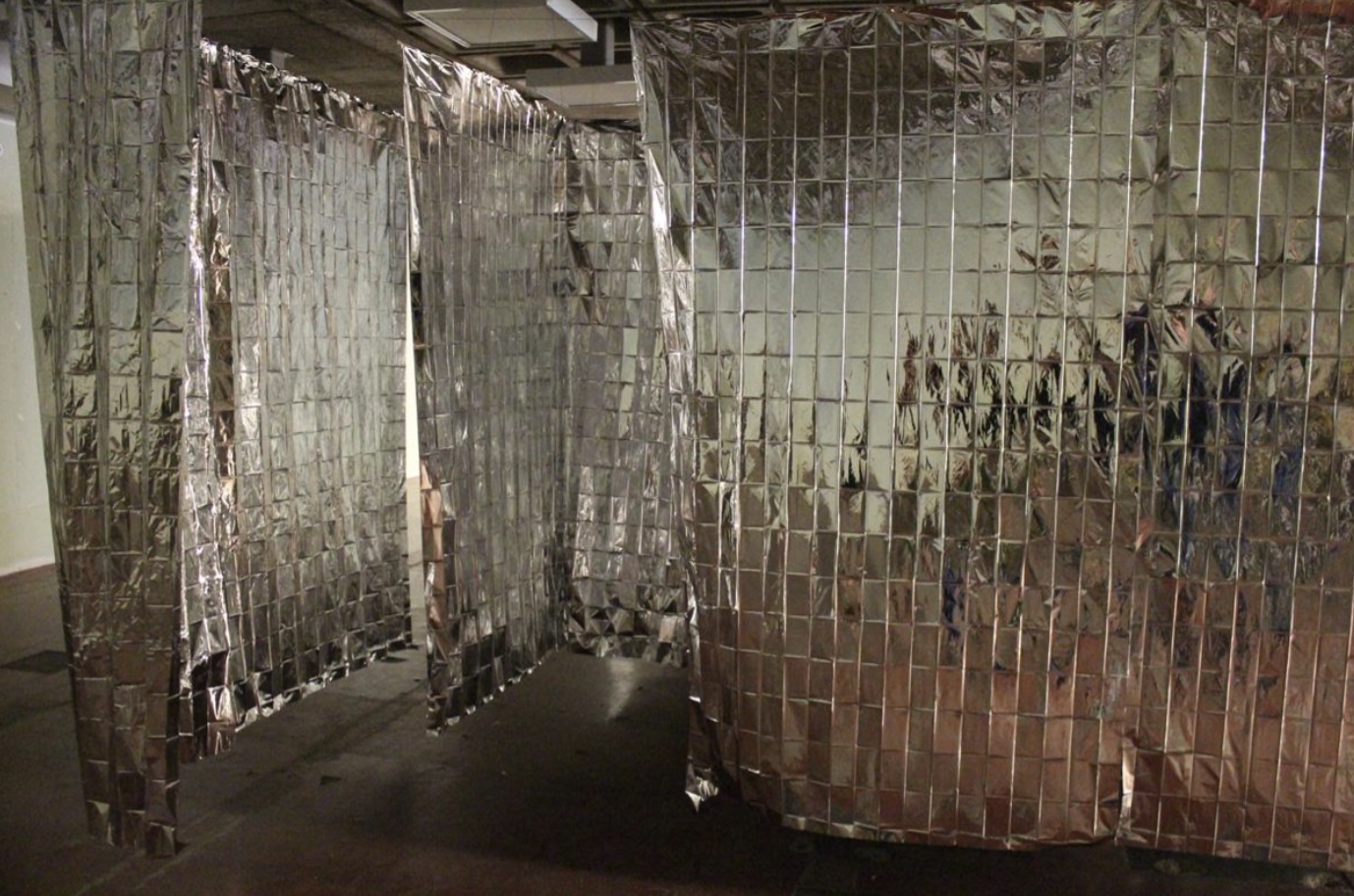
For me, it happened while moving through Reflections, an installation made of emergency blankets that shine and reflect like thousands of soft mirrors, forming what feels like an endless zigzag corridor. The piece presented one of the most uncomfortable and familiar sensations my mother and I have always shared: haunting each other like ghosts. Ectoplasm, melancholy, and grief became matter while standing there. After walking through it a couple of times, we both agreed that behind the technical simplicity of the piece, there was something that meddled itself into the skin. Where (if anywhere) is the trick?
A couple of weeks later, in a video call with the artist, the secret was revealed to me: "I don't like working from a blank page (…) I'm interested in the remnants of objects and the sensory detonations they provoke in the body." That intention is evident throughout the exhibition, curated by Nuria Carton de Grammont and Fernanda Ramos Mena. In Stocking Room, for example, the artist draws us into a sample display of pantyhose laid out across three walls forming a "u," which can evoke both the voyeurism of an erotic shop and a humorous feminist critique. Its ambiguity does not rest in the discourse—the curatorial texts clearly communicate a critical positioning—but in the subtle participation of the artist, who allows the objects to speak for themselves.
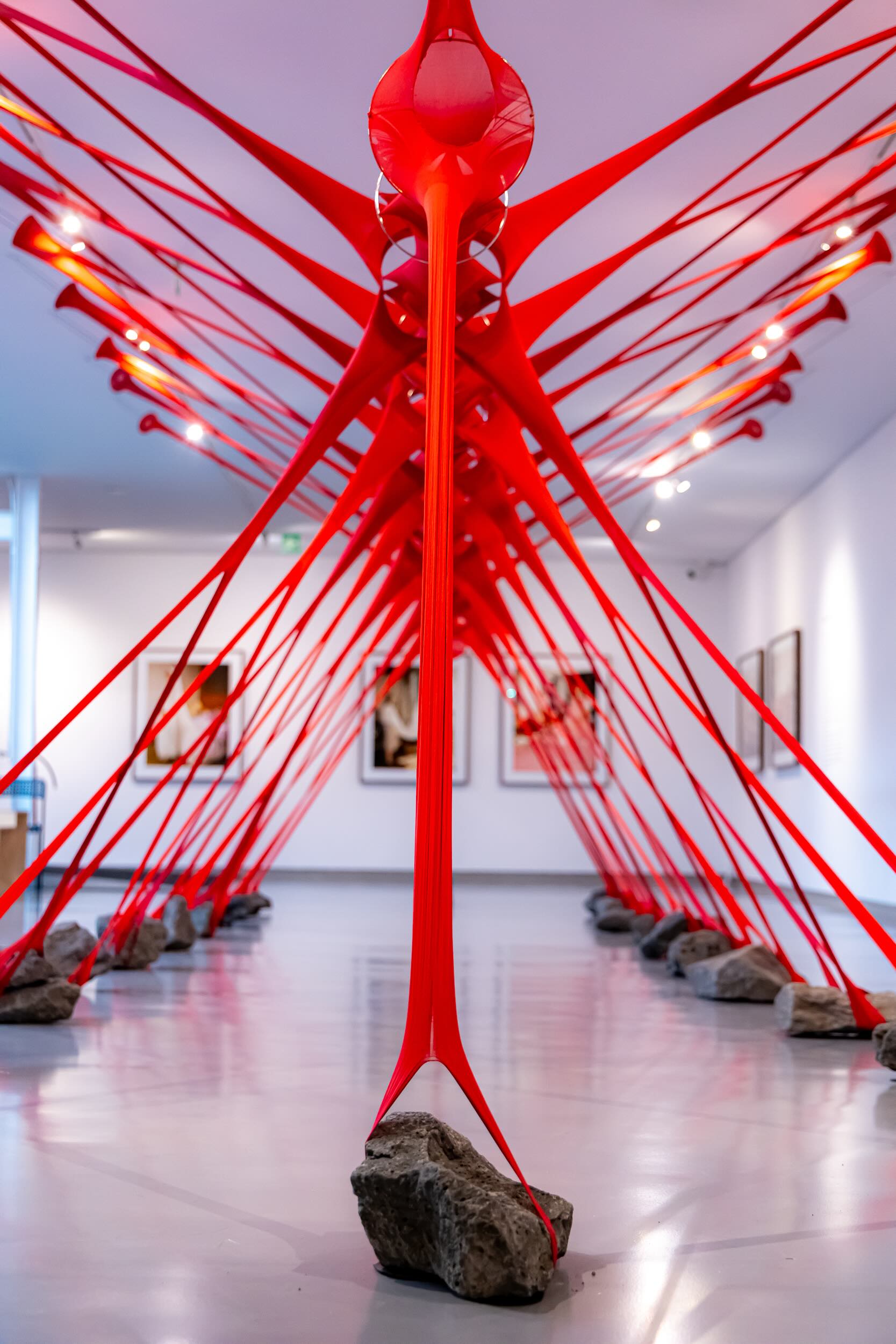
In conversation about pieces like Tensión and Patterns, made of colored stockings stretched with hoops and stones, María told me that two sensations are usually triggered in the audience: the memory of oppression and the exaltation of desire. This depends on whether the person has been the one who wears the stockings or the one who only looks at them. Beyond the evident political dimension around gender and sex, I find stimulating the way in which Ezcurra can erect powerful feminist antimonuments that, at the same time, evoke erotic fantasies for the male gaze. That versatility is a kaleidoscope through which to look at oneself. And a risk worth taking.
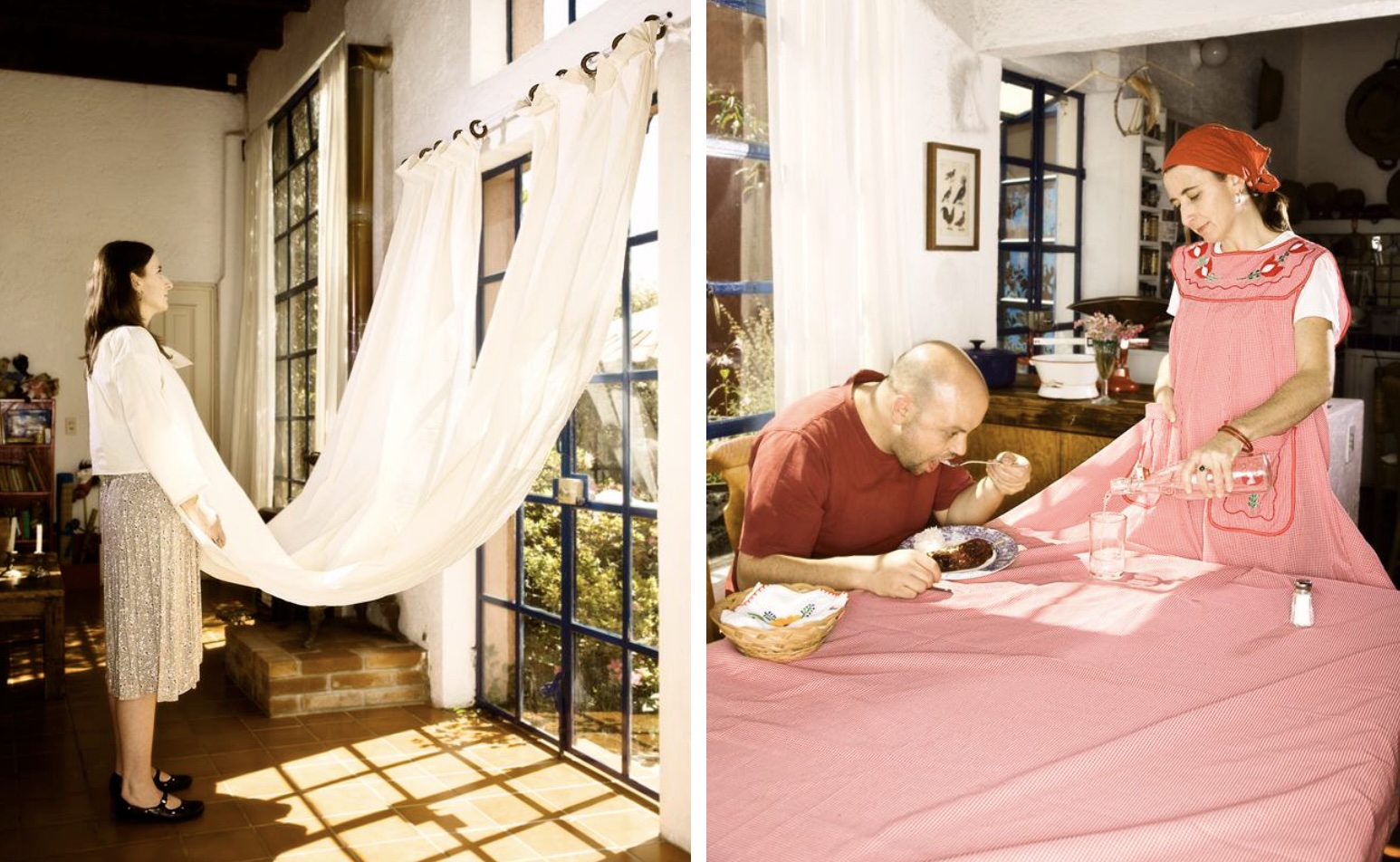
There is a dilemma between rhetorical clarity and aesthetic plurality that forms part of a broader negotiation running through socially committed contemporary art. On one hand, there are works like Guardarropa del ama de casa perfecta—a photographic series in which the artist portrays herself disappearing into the furniture to satisfy the cis-hetero-white-etc man—where the aesthetic experience is illustrative and pedagogical. Its accessibility and directness are useful, like a lesson on basic patriarchy, but in exchange it impedes a reading that goes beyond morality. On the other hand, works like Reflections, Tensión, and Stocking Room leave the field more open and enable more diverse poetic-sensory experiences, at the cost of being more dependent on the audience's capacity to find the thread. In both approaches there is an ethical commitment on the part of the artist and the curation—so which carries more political weight in art today? Rhetorical clarity or aesthetic plurality?
In Ezcurra's work, the answer lies not in the dichotomy but in the pendulum of hybridizations. While the installations overflow into mediations with the museum's operational team, the research processes crystallize into object-based pieces. The installation is delivered already resolved, but the exhibition refuses to stay still, expanding into a public program that is named with the same hierarchy as the exhibited works. This return of María Ezcurra to the Mexican art scene is pertinent because it offers a fertile space to keep thinking about socially and politically committed art; to put its languages and formats into practice; to continue imagining the roles of art in the face of the reality of the context that surrounds it. Now, while my mother and I continue to untangle what it means to haunt each other like ghosts, contemporary art can think about how to receive this return.
Translated into English by Luis Sokol
Published on Jul 21 2026