Review
Tears and Laughter in the Pavilion of Happiness: It's a Small World After All. Josué Mejía at Proyectos Monclova Gallery
Reading time
5 min
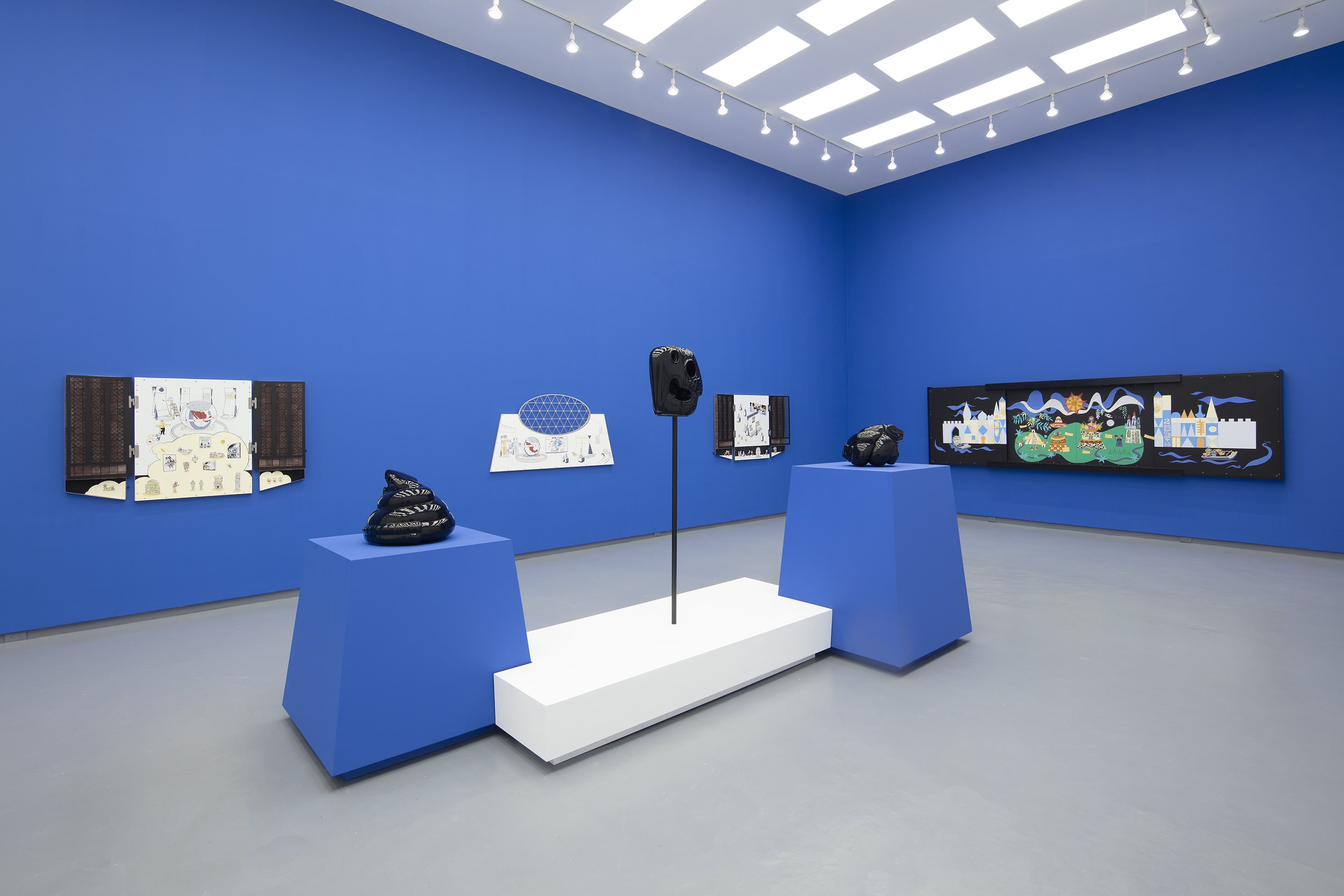
Apenas te darás cuenta que estás viendo dibujos animados [You'll Hardly Realize You're Watching Cartoons] is the title of the current exhibition by Josué Mejía, a 32-year-old Mexican artist, at Proyectos Monclova gallery. The show revisits the aesthetic that American illustrator Mary Blair (1911–1978) developed for a series of animated shorts commissioned by the United States government from the Walt Disney Company during the 1930s and 1940s. Disney sent a group of illustrators, called "El grupo," to several Latin American countries (Brazil, Chile, Argentina, Peru, Bolivia, Colombia, and Mexico) to learn about and portray the cultures of those regions. The aim was to produce a series of animated films that resulted in Saludos Amigos (1942) and The Three Caballeros (1944).
Later, in 1963, Blair was called upon by the same company to design It's a Small World, a tourist attraction produced under a commission that the United States government requested from The Walt Disney Company as part of the "Good Neighbor" policy — a strategy to foster greater unity with Latin American countries and counter the European fascisms arising from the war.
The sketches produced by Mary Blair — a member of "El grupo" and gifted in color and form — during this research were incorporated into the theme park attraction.
What originally became It's a Small World was planned for the 1964–1965 Pepsi-Cola Pavilion, sponsored by UNICEF and held in New York. By that point, major corporations such as General Motors and Ford had already participated in international fairs. By 1964 they had acquired a greater presence than states at these exhibitions, allowing one to see the shift in global structure. This situation is symptomatic of what we live with to this day: the interference of billionaires who, without being strictly political figures, have influence over governmental decisions.
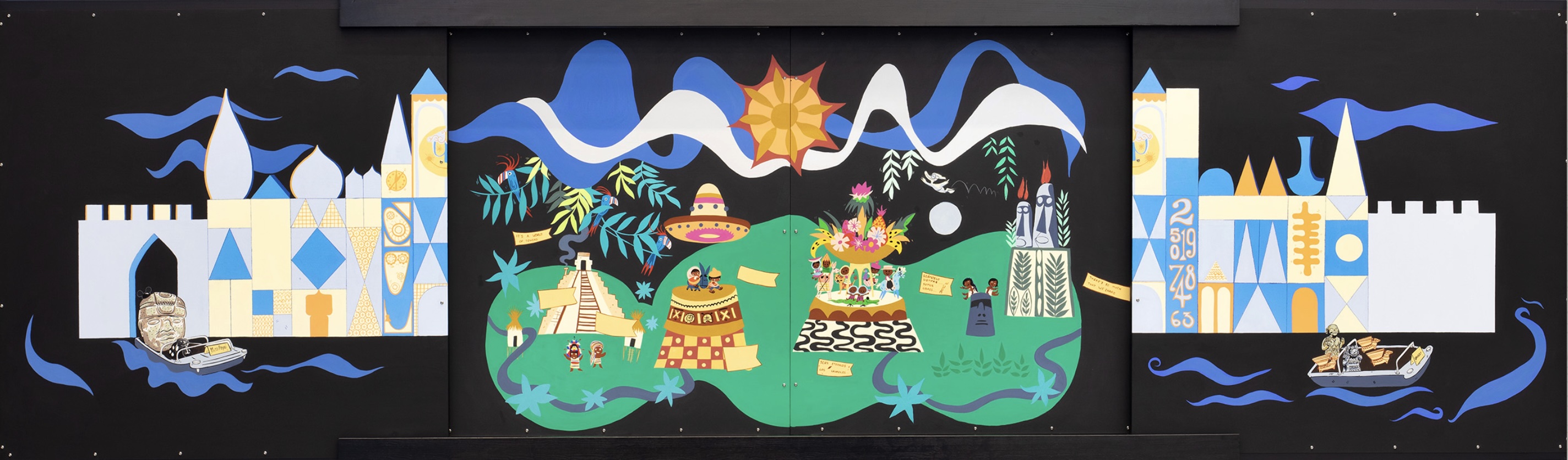
International cultural representations, in a period as critical as the Cold War, presented a profound contradiction: on one hand, the attraction featured children from the five continents dressed in their countries' traditional costumes, singing in unison to promote world peace and cultural diversity; on the other, the United States sought to halt the expansion of communism, win the technological race, and generate fear through speculation about a possible nuclear war. In 1966 the attraction was relocated and opened at Disneyland Park, and was subsequently replicated at theme parks owned by the same company in other countries.
The second representation featured in Apenas te darás cuenta que estás viendo dibujos animados is the Mexico Pavilion at the 1964–1965 World's Fair in the United States, commissioned to Pedro Ramírez Vázquez, along with its museography. The architect designed a show with elements from industry that conveyed modernity and progress through technology, positioning the country at the vanguard and emphasizing the development of color television by Guillermo González Camarena. But the efforts were not enough for the American public, which expected folkloric representations; so for the exhibition's second year, Fernando Gamboa was brought in to handle the curation, assembling folk art, modern (contemporary at the time), colonial, and pre-Columbian art (Aztec, Maya, and Xochicalco), including the Olmec head.
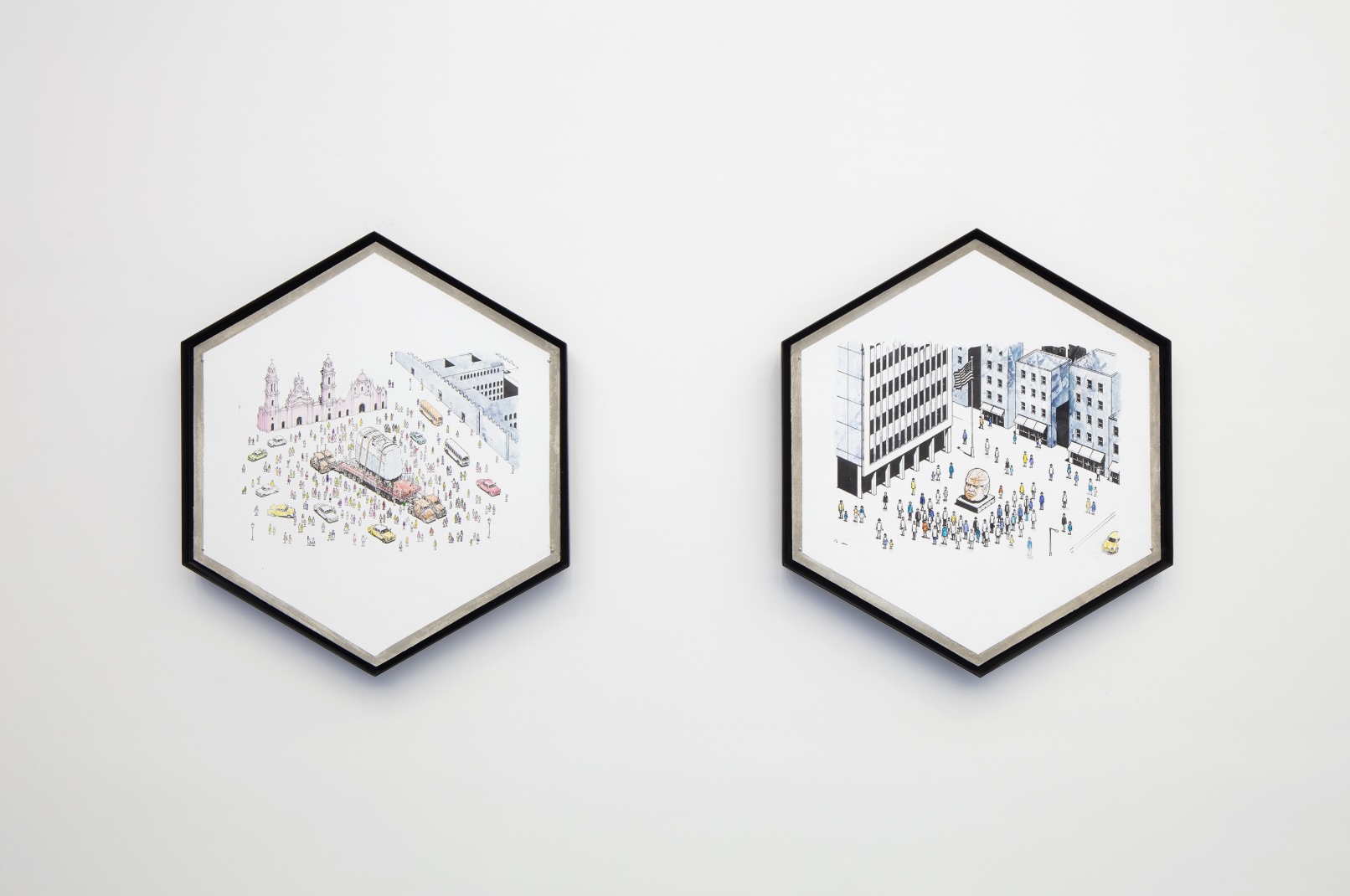
Simultaneously, in 1964, the monolith of Tlaloc was moved to the Museo Nacional de Antropología. The pieces Josué made depicting these scenes are titled Monumentales transportes, with the intention of pointing to the virile gesture of a powerful nation-state that possesses the force needed to move such heavy things.
For this exhibition, Josué Mejía draws from both representations and their iconography. He turns to The Three Caballeros, in which Donald Duck and his friends Panchito Pistoles and José Carioca have adventures across Latin America, serving as American propaganda for children against European authoritarianisms. It is worth noting that Panchito Pistoles, the Mexican character, was selected as the mascot of Escuadrón 201*, with the aim of fostering nationalism among the population.
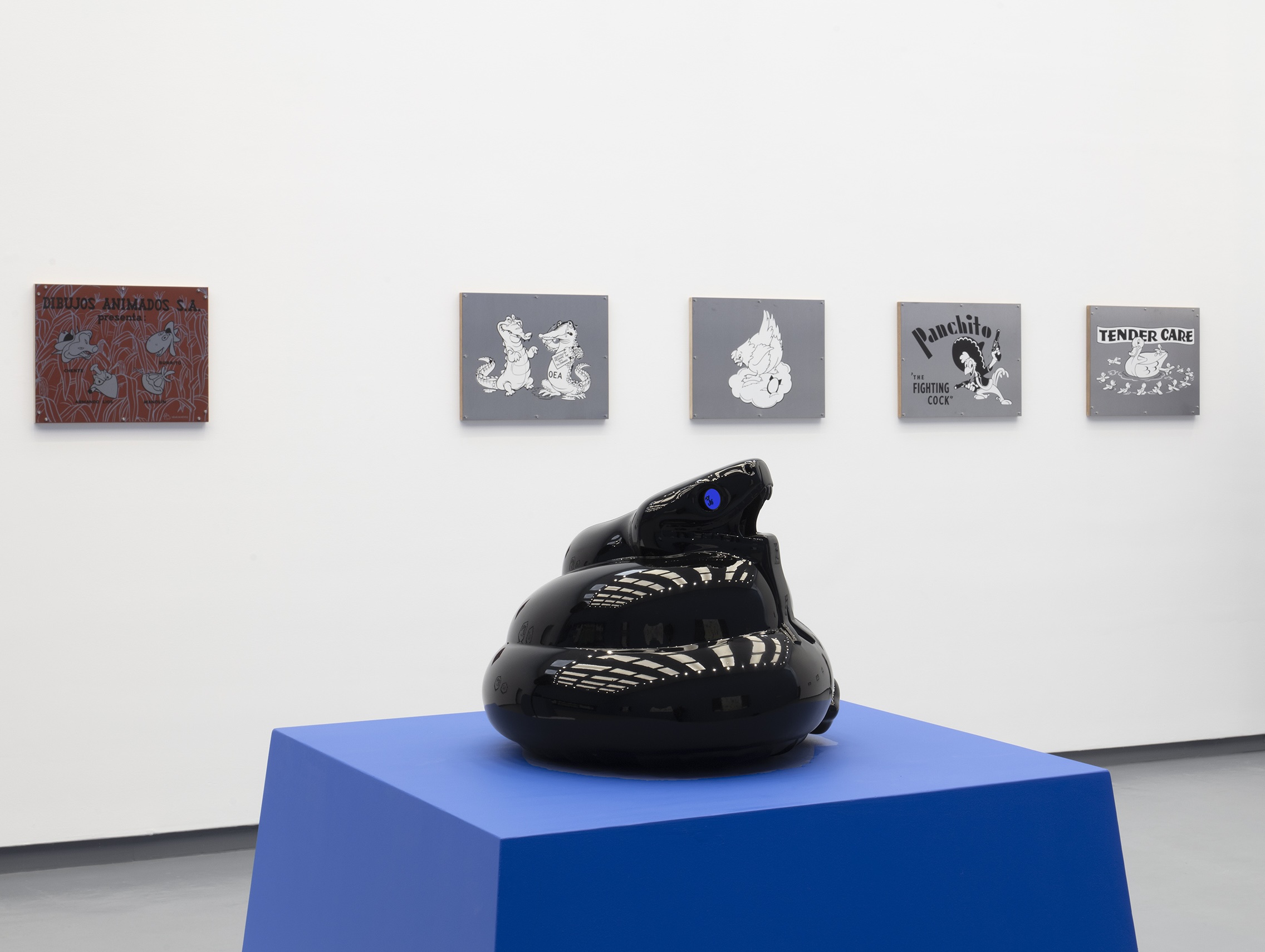
To deepen the critique, the artist constructed the piece Latinoamérica (2026) featuring characters from It's a Small World, which operates like a clock — marking the hour 24 times a day, but each time pointing to a US intervention in the world: 23:52 approx., the attack on the Palacio de La Moneda in Chile, where Augusto Pinochet overthrew Salvador Allende and imposed his iron dictatorship. 04:00, the military coup in Guatemala. 05:00, the beginning of the Argentine Revolution, with General Julio Alsogaray breaking into the presidential office. 05:20, the resignation of Arturo Illia, the country's president at the time. 22:30, the interruption of democracy in Uruguay by the military through president Juan María Bordaberry — the time corresponding to when the news broke on television and radio.
The exhibition also includes references made by Sergei Eisenstein, Jean Charlot, and Diego Rivera to Mickey Mouse, evoking him as a revolutionary figure insofar as the working class could forget their obligations through cartoons.
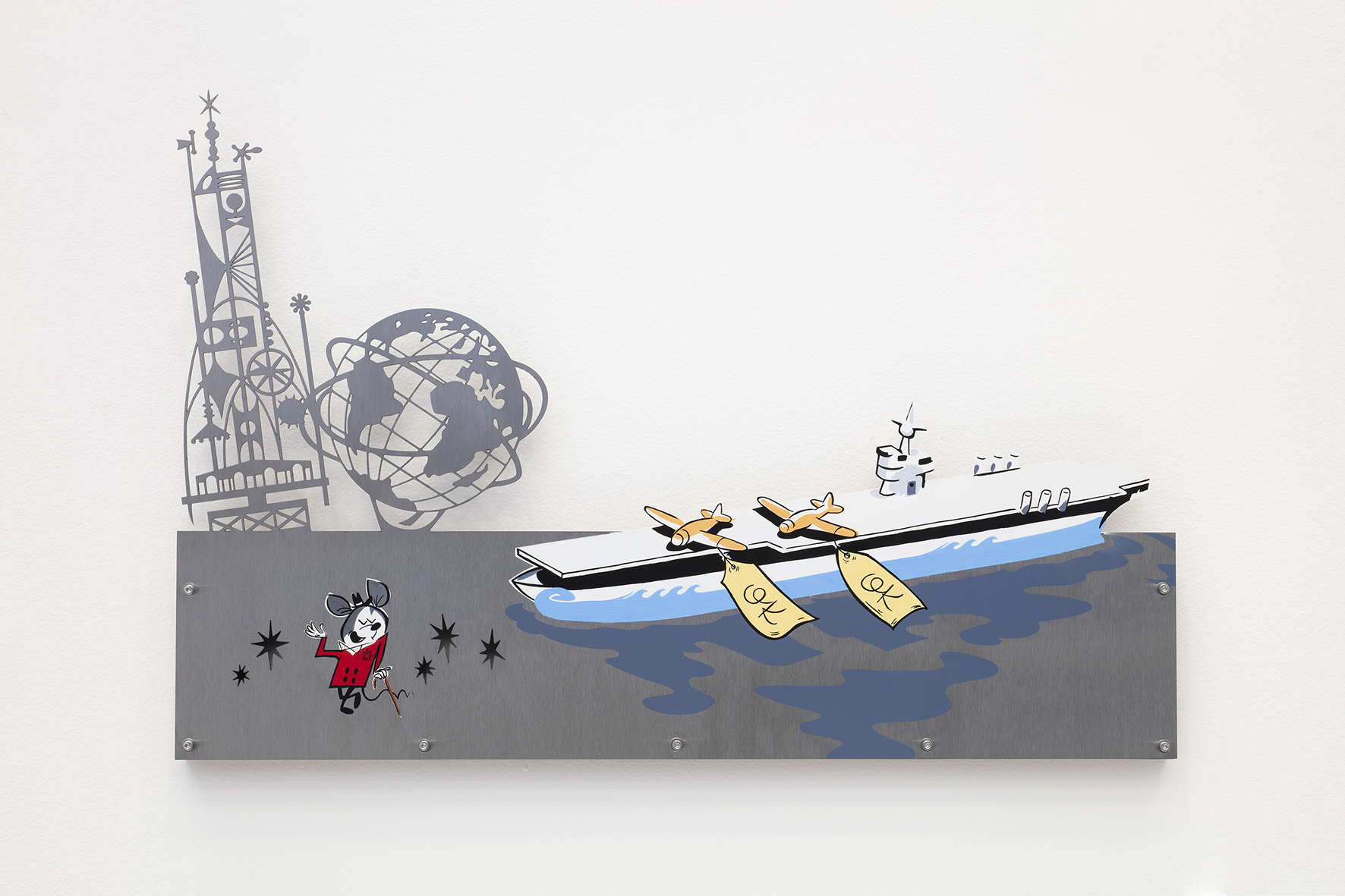
There are also four fictional letters imagining a possible encounter and conversation between Mary Blair and Walt Disney, Miguel Covarrubias, and Jean Charlot; as well as drawings mounted on a stretcher like a chalkboard, held with thumbtacks in the manner in which storyboards for The Walt Disney Company's animated films used to be arranged. Also on display, on steel sheets, are insignia for badges and patches produced during the Second World War for different sections of the United States armed forces. With a total of 21 works, the political and social reflection that Josué Mejía generates is rendered through illustrations that originated as national representations alongside images directed at children.
The exhibition is on view at Proyectos Monclova until August 8.
— Isabel de la Vega
Translated into English by Luis Sokol
*Mexican air squadron that supported the United States Air Force during the Second World War in the liberation of Luzon
Published on Jul 3 2026