Fabiola Rayas Chávez
La enunciación del deseo
Exhibition
-> Aug 20 – Sep 20
Opens Aug 20 | 6:00PM
Espacio Cotidiano, the Contemporary Art Projects Laboratory at the Universidad Iberoamericana Puebla, presents The Enunciation of Desire (La enunicación del deseo) by Fabiola Rayas Chávez.
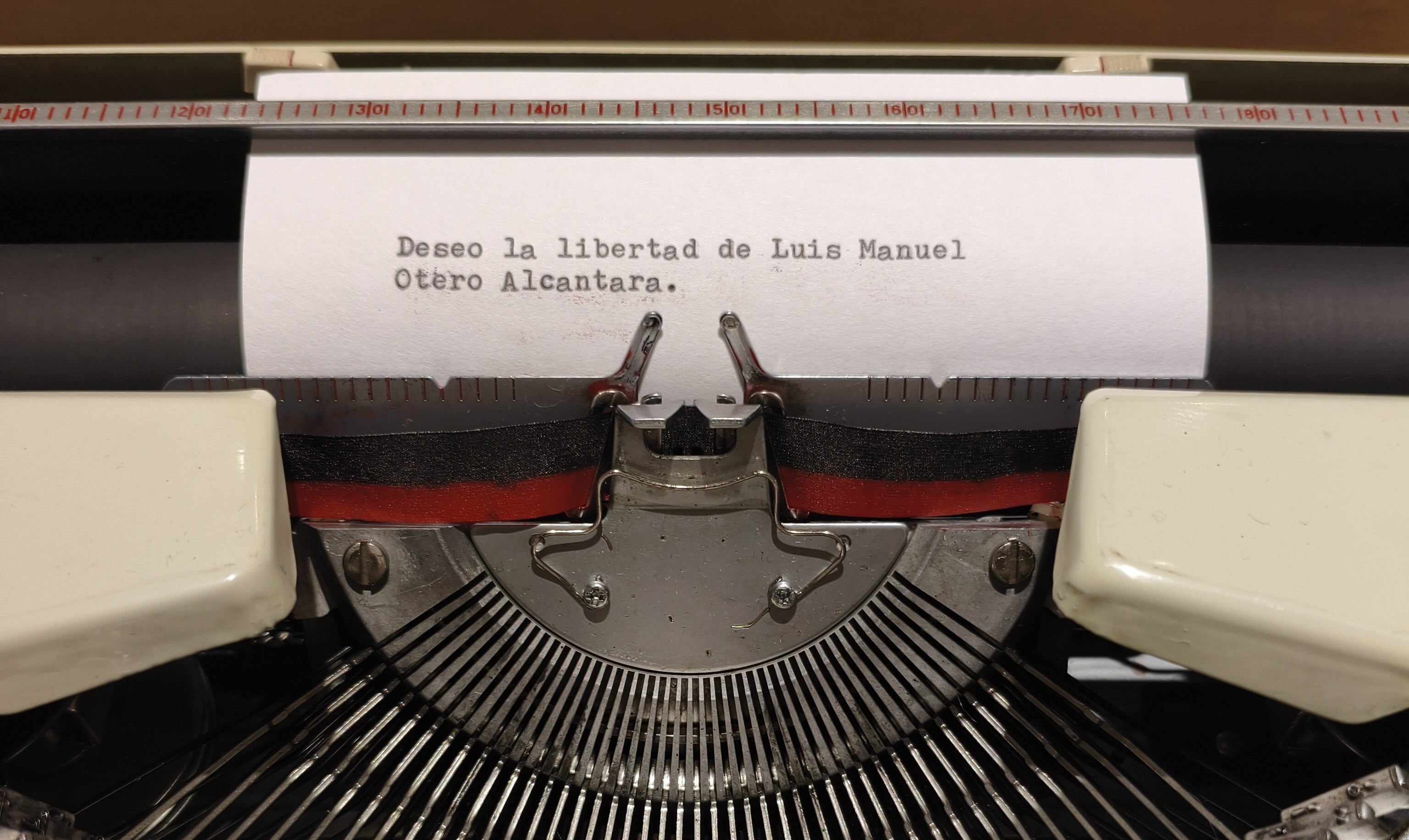
The exhibition brings together a dozen installations and textile objects on which messages are woven using ink, fibers, scraps, or plants. As visitors move through the exhibition, the pieces convey absences and forms of violence that Rayas Chávez transforms into expressions of desire, turning pain into a political bond.
The artworks in the exhibition address contemporary structural crises, such as the situation of political prisoners in Cuba, violence against women, and forced disappearances in Mexico.
Espacio Cotidiano becomes a textile territory that highlights the visual and sensitive nature of Rayas Chávez’s work. Her practice stands at the intersection of long-duration performance, non-objectual art, and collaborative productions where the notion of authorship blurs to generate bodies of work through accumulation. Often, within these pieces, the written word enables the expression of stories, proclamations, or feelings that, when articulated as a whole, shift an individual experience towards the collective.
The curatorial proposal emphasizes Fabiola Rayas Chávez’s consistent practice of articulating what violence seems to render unspeakable, yet she brings it to the surface through a shared and slow process of creation to contain and embrace it. Similarly, the exhibition encourages the debate on desire, drawing on the perspective of Suely Rolnik, who understands it as a mode of production—a will to live, to invent another society, and another perception of the world. Desire, then, is not an unbridled instinct, but a political force that is consistently sought to be captured and disciplined, yet equally capable of fostering practices of resistance.
The enunciation of desire and the public actions that form part of the exhibition's program invite people to participate and engage with Fabiola Rayas Chávez’s work, and to activate the potentials of desire as forces of insurrection, care, and transformation.
— Alma Cardoso
Artist