Review
Pain, Materiality, and Bodies in "¿Cómo salimos?" by Teresa Margolles at Museo de Arte Contemporáneo de Monterrey
by Zara Almazán
Reading time
5 min
The Museo de Arte Contemporáneo de Monterrey (MARCO) presents ¿Cómo salimos?, the first major survey of Teresa Margolles’s career in the Americas. The exhibition brings together more than two decades of artistic practice that reveals the body, absence, and death as affective cartographies of violence. Through an anthropological and geographical mapping of emotions, politics, bonds, and relationships to violence, it renders visible realities, intimacies, and identities.
Sin título, 2025. Elegía de la Patria opens the exhibition. Through the gathering of 32 panes of glass bearing witness to acts of violence, and the sound of a train crossing the entire country, the installation brings the nation into a single room. Each pane is mounted on a metal structure connected to the sound system, which, through vibration, causes them to tremble. They shake as if the train were passing beside them; they tremble with fear and absence. Margolles introduces us to the country by making it tremble—and makes us tremble with it. As the wall text notes, “the resonance generated by the sonic element alludes to the fragility of the boundary between the individual and the situation to which they are subjected.” This is a vast and fragile border entangled with territory, other bodies, the non-living, power, dispossession, fear, and misrecognition.
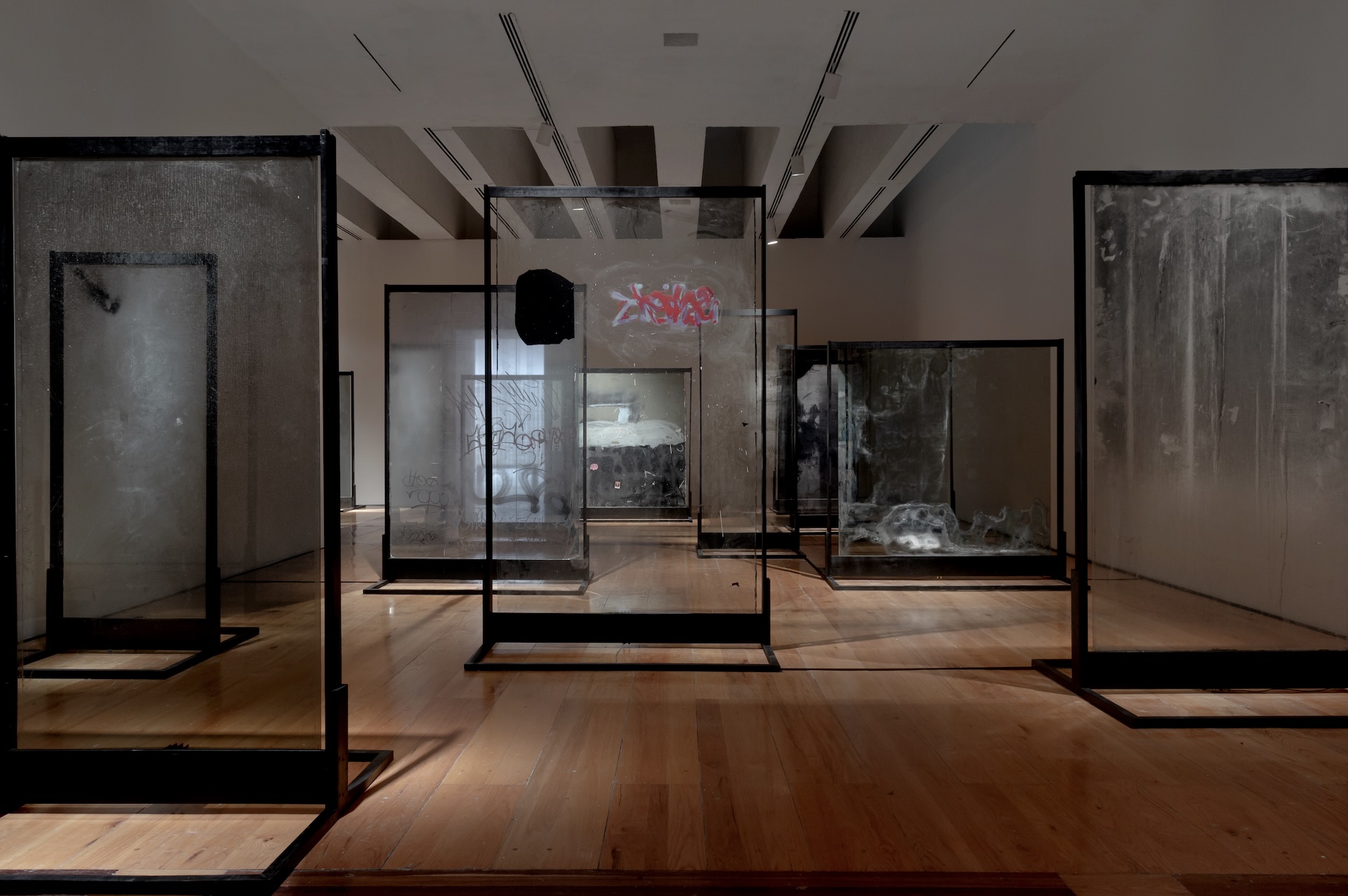
In this way, the piece erases distinctions between territories and materials, rendering Monterrey indistinguishable from Culiacán, Culiacán from Zapopan, Zapopan from Coatzacoalcos, Iguala, Tapachula, Apatzingán, or Palmarito. In a country where violence often seems uniform, the work prompts a question: what might be revealed by distinguishing one territory from another within the framework of violence? Or rather, under such conditions, is distinction even possible? What would it mean to name each pane of glass? Would differentiation matter?
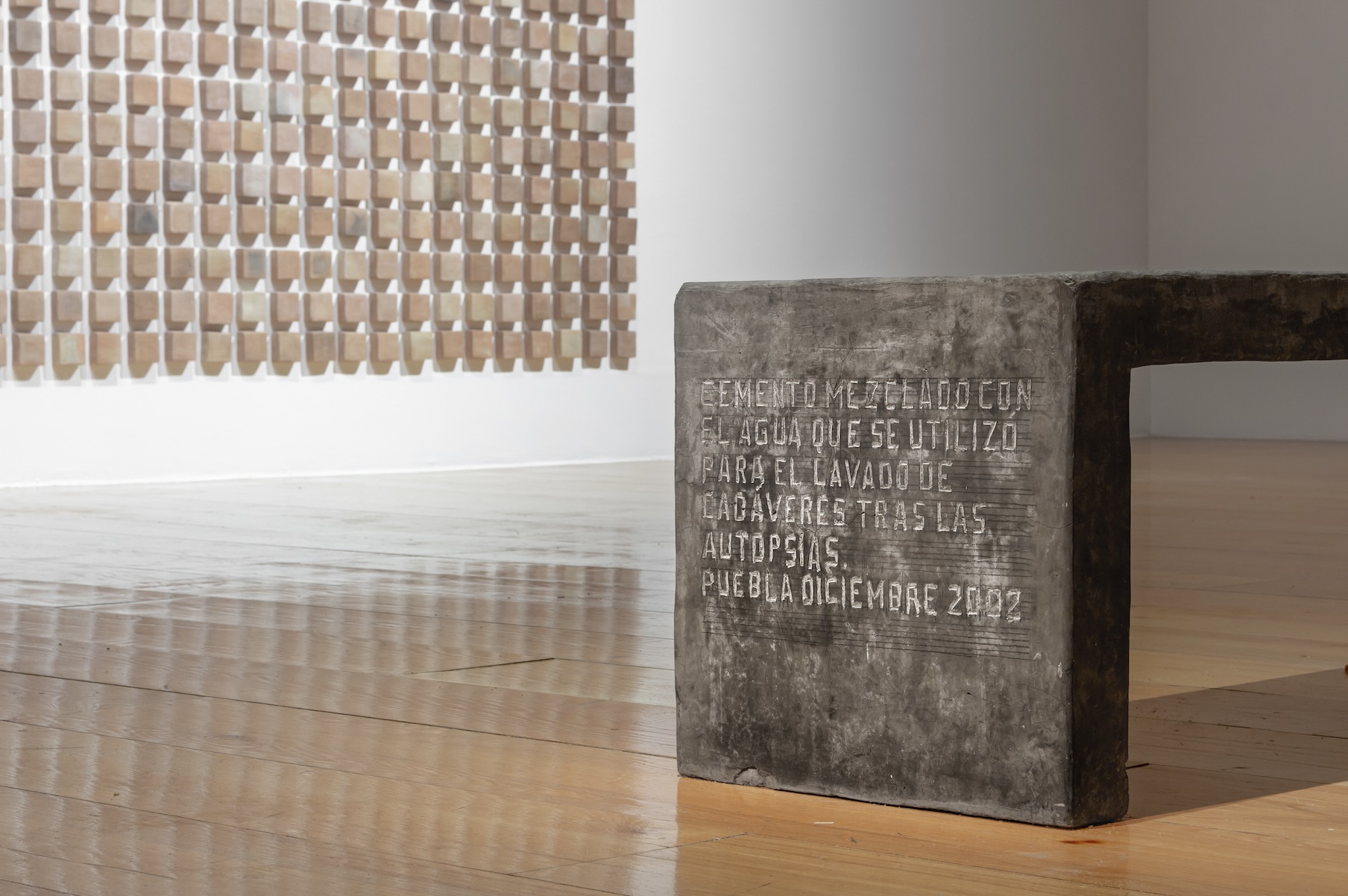
As one moves through the exhibition, the curatorial approach guides us from the general to the particular, always insisting on a return to territory—indeed, pulling us back to it with force. There is a circular, reiterated exploration with/for/from/through/without pain that raises another question: what other sites and materials within our ways of inhabiting bear witness to violence and give it form? This leads to works such as Banca and Aproximaciones al lugar de los hechos. Both employ water and earth to mark violent events. The first operates from the dead body, using water employed to wash corpses during autopsies; the second, from the body-as-territory, using water that once demarcated murder scenes. These works construct the violated body not only as human, but as organic, inert, rhizomatic—a living agent. That violated body is also soil and water; it is tree, wall, house; stone, rain, and land. It is a body very much alive, yet without organs—a witness-body, a mutable material constantly becoming something else. Removed from its original context, it becomes another voice.
Trepanaciones (Sonidos de la morgue) —which recalls works by Colectivo SEMEFO—possesses a certain floating, disorienting quality. It almost goes unnoticed and, though it may seem explicit, underscores a sense of not knowing where we are or where events are taking place. The piece presents an audio recording of a cranial trepanation during an autopsy: the fall of liquids, the use of tools, footsteps, voices, habituation. Through imagination, death and rupture become tangible; tears felt inevitable. Cristina Rivera Garza writes that “pain not only shatters, it also produces reality.” This raises another question: can violence be measured in other ways? Why does pain seem to be the only reference?
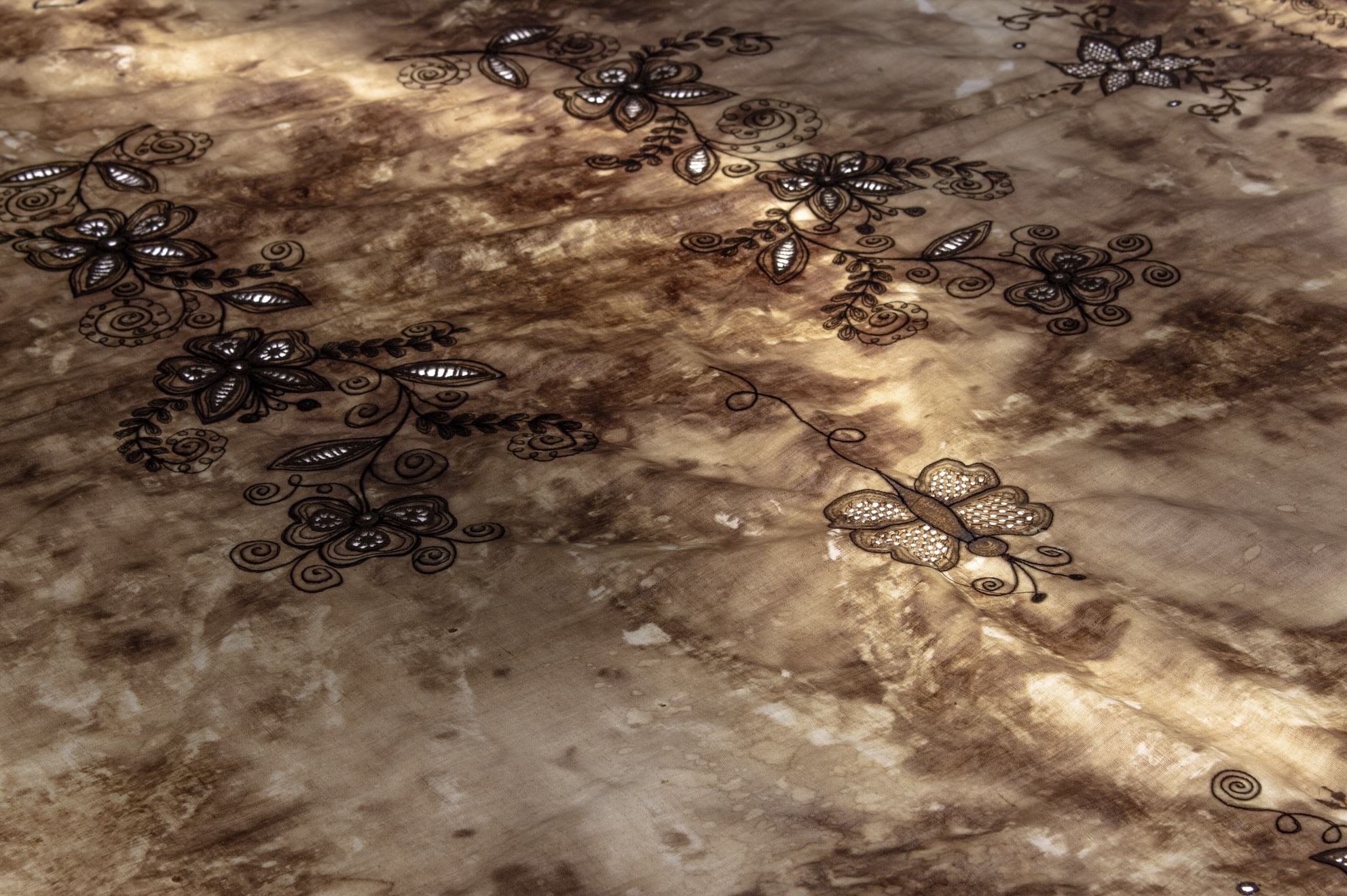
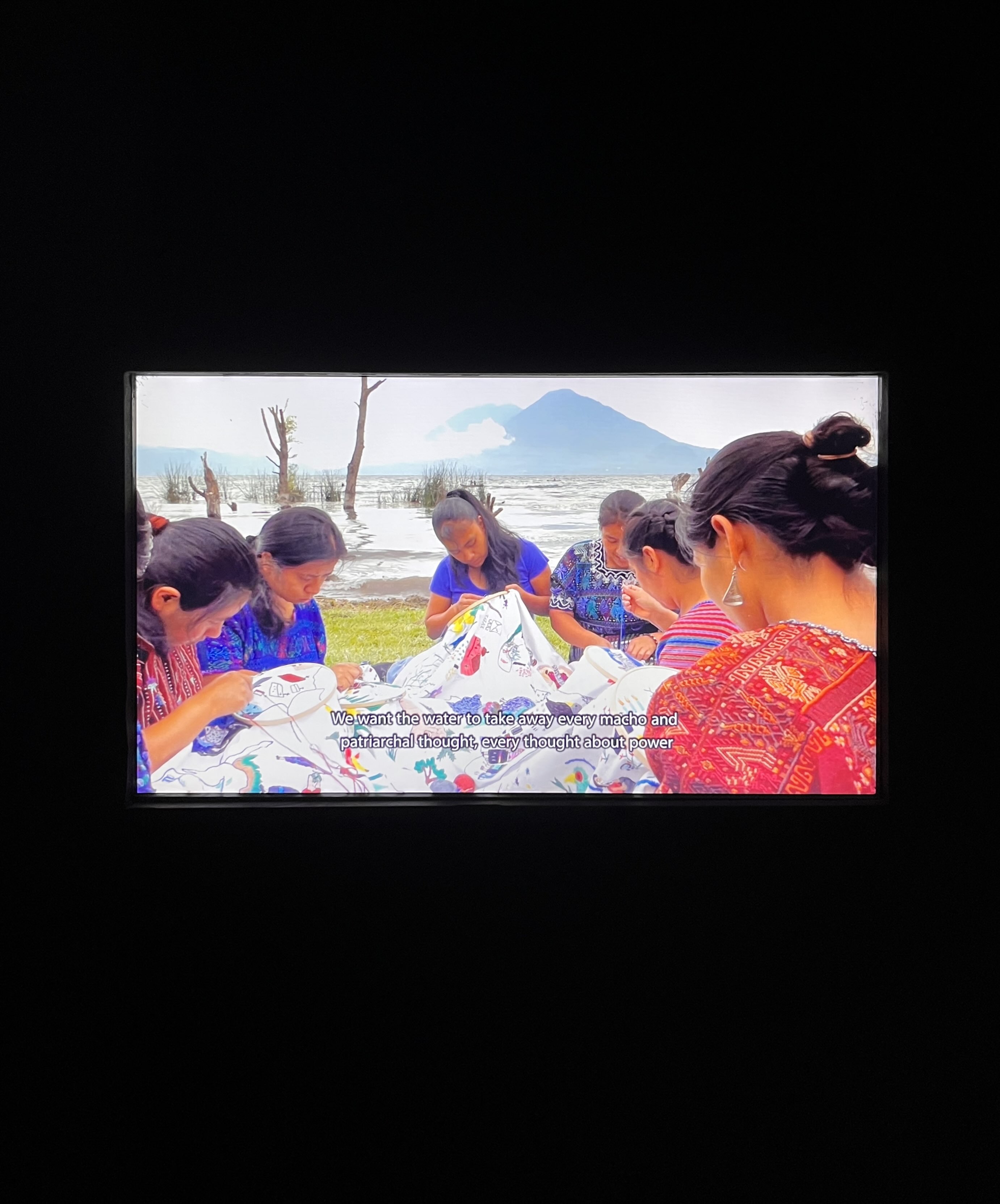
The explicitness of these works stems from their origin; this is precisely what draws us back to them—and to the territory. The materials possess personality and identity. A thread runs through several works, combining fabrics impregnated with fluids from feminicide victims with traditional embroidery. The process of making the piece generates bonds: first with the women who embroidered the textiles, who, while working, shared their stories of loss and pain; and later through the activation of these fabrics by the public. The work underscores that death is collective and, within the exhibition, trans-material: the materials on display do not serve a single function, nor do they have a fixed end.
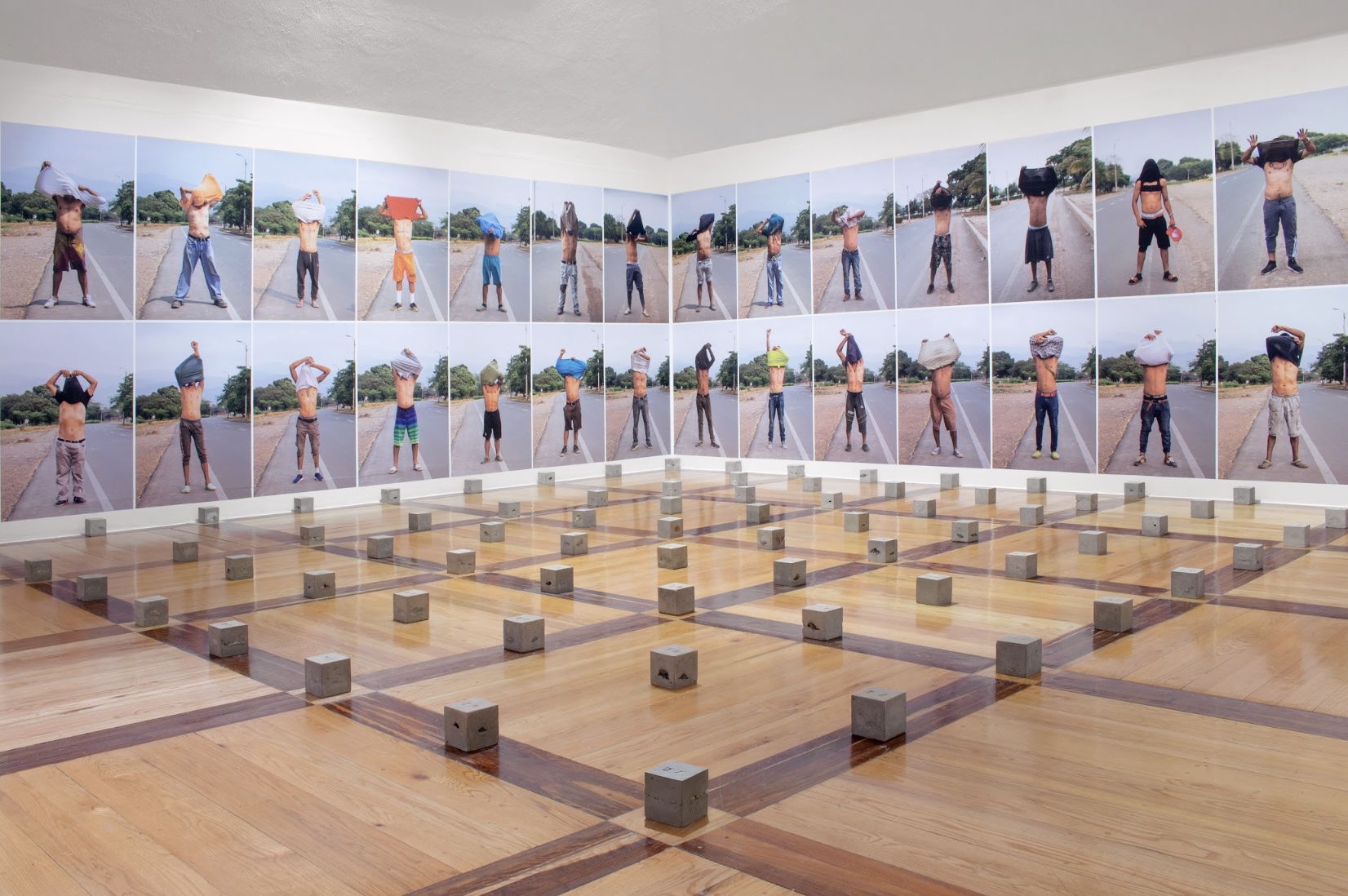
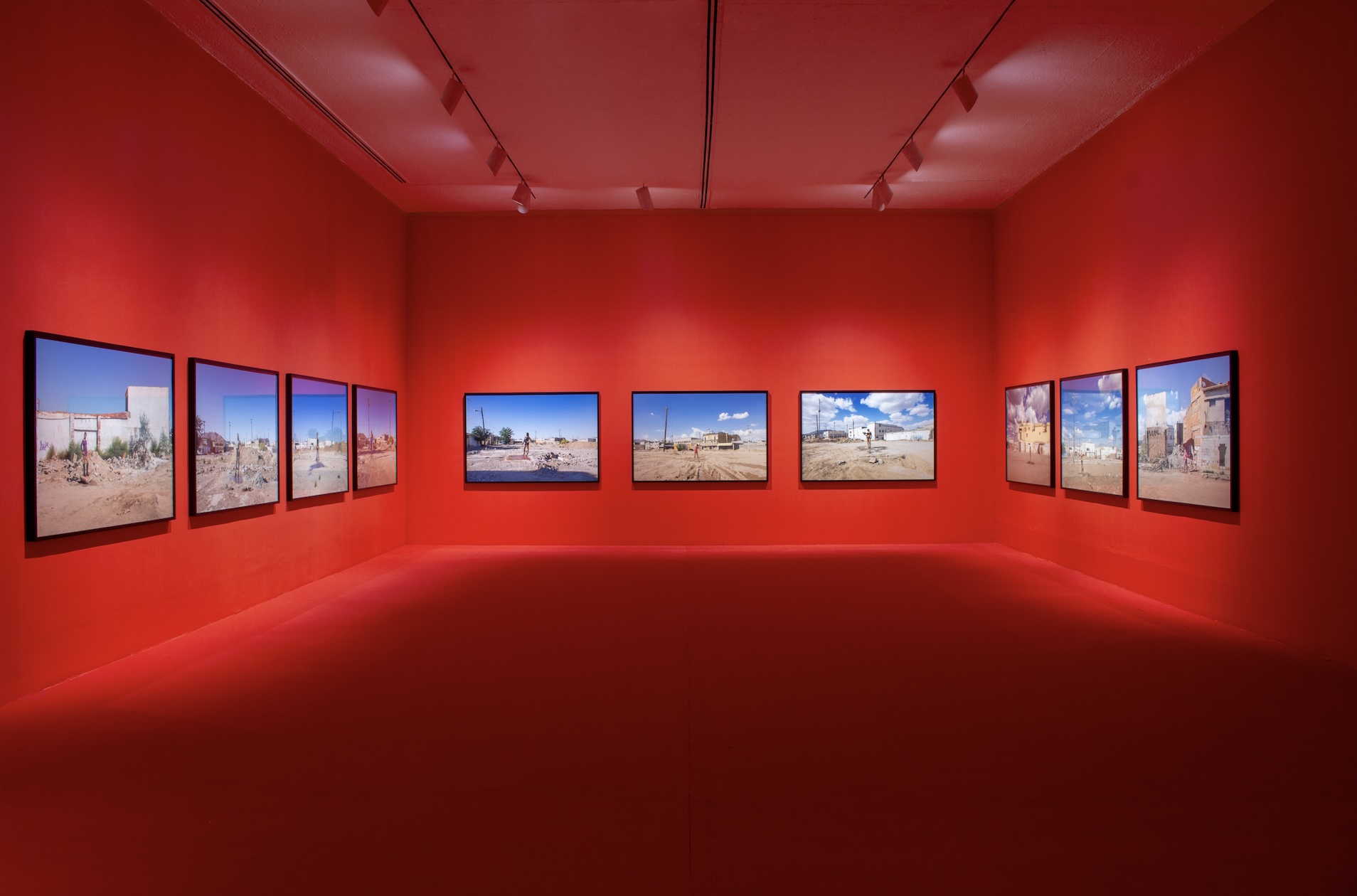
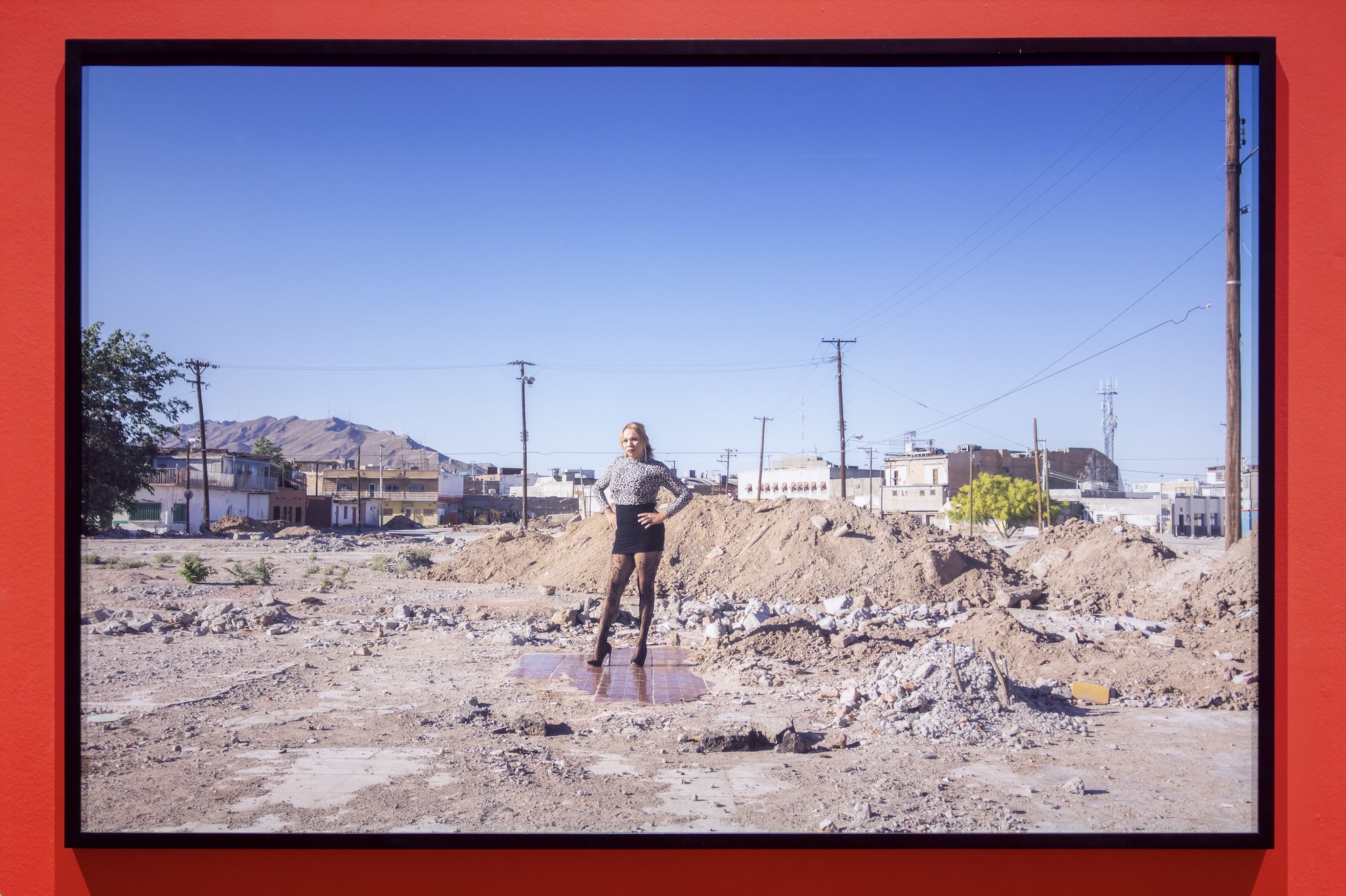
Near the final rooms, Pistas de baile presents a photographic series of trans women posing at former workplaces that were demolished by government order. In the following gallery, La Promesa gathers pulverized rubble from one of the few houses left standing after episodes of extreme violence. Both works are situated in Ciudad Juárez, operating from a specific territory—not the national scale, but the domus: something intimate, familiar. The curatorial narrative returns us to what we recognize: the ground we walk on, the spaces we inhabit, what appears general—home, town, dispossession, detachment, fear, pain, violence itself. It is an affective recognition of violence.
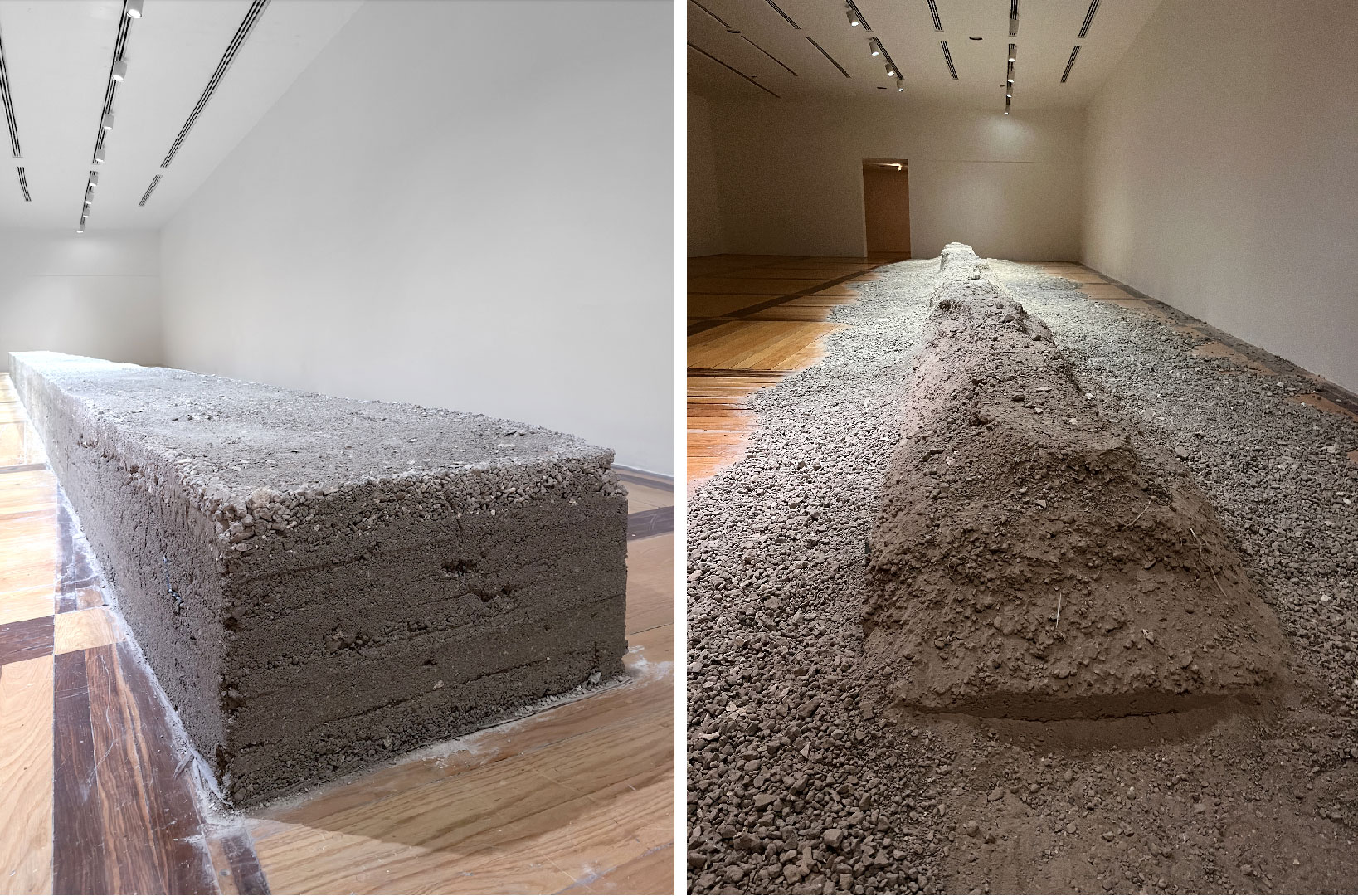
On my return from Monterrey, it became clear that the territory of violence appears untamed, indistinguishable, immeasurably painful. This pain frightens me; it hurts again. ¿Cómo salimos? How do we get out? Perhaps the exhibition suggests that we do not exit by leaving the territory behind. Rather, the agency that produces pain—through the body of the earth, the body of water, the body itself, the face, the spoken body, the inhabited body—is a force of memory that confronts us with a country where violence no longer distinguishes between bodies. How do we get out of violence, embodiment, domestication, subjugation, death, oblivion, institutional ignorance, absence, civic indifference, violated identity, my wounded territory, domination, regime, pain—how do we get out?
— Zara Almazán
Translated into English by Luis Sokol
Published on Apr 28 2026