Elisa Rizo and María Farías
Canchas Desiguales
Performance
-> Jul 23
Museo de Arte de Zapopan
Or by appointment
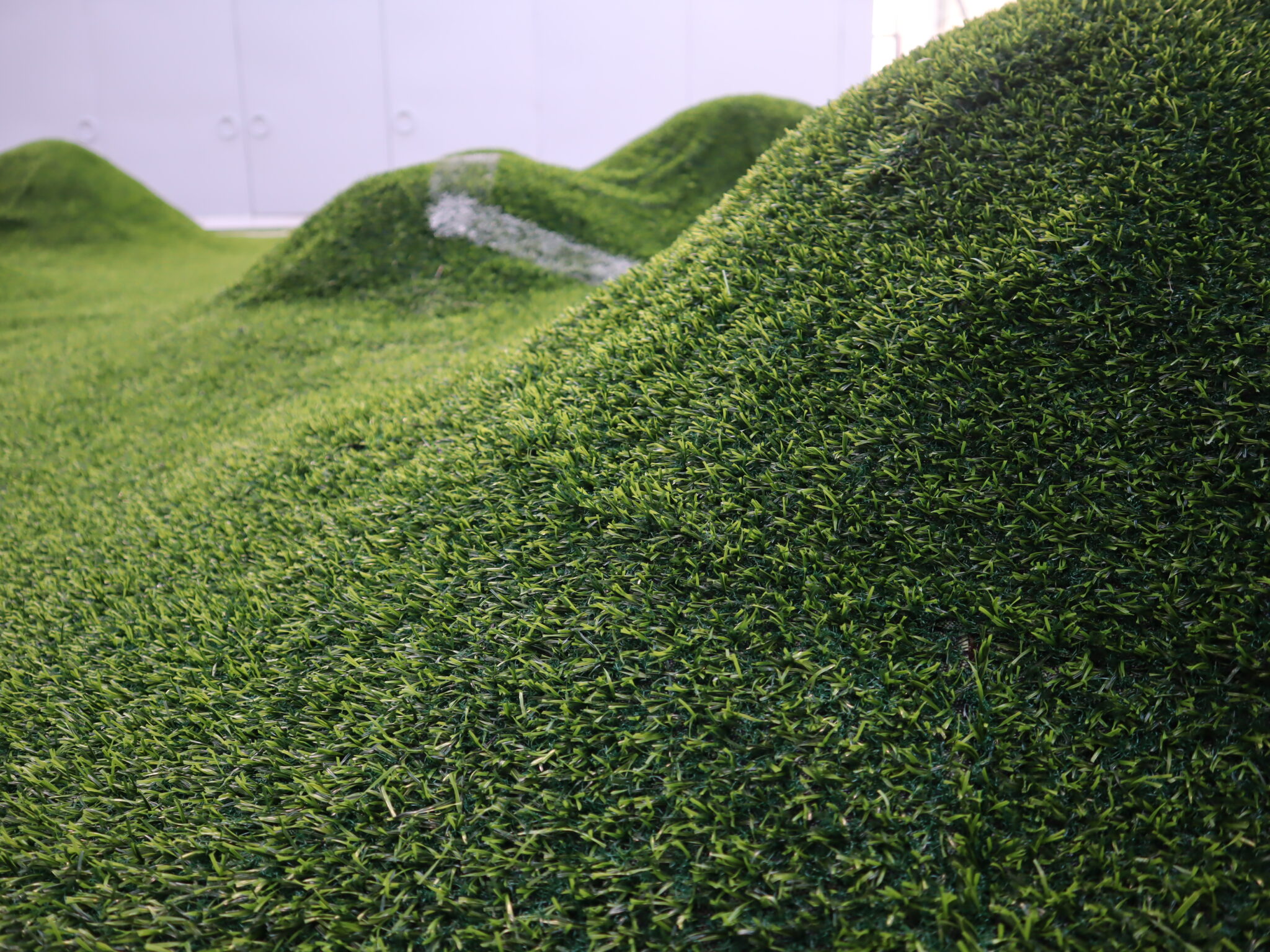
In the framework of the exhibition Canchas Desiguales, by Priscilla Monge, the Museo de Arte de Zapopan presents Señal de campo, a performance by Elisa Rizo and María Farías, with curatorship by Yair López.
Señal de campo is conceived as a radio performance based on the live broadcast of a fictional match, imagined by students and teachers of communication, art, and culture from play-by-play narratives that blend philosophical essay, news, archives, testimonies, and fiction. The piece dialogues with Priscilla Monge's intervention Canchas Desiguales by translating into the sonic realm the tensions present in a terrain altered by inequality: although the rules are the same for everyone, not all people play under the same conditions. The narration intertwines with natural soundscapes from Jalisco, experimental music, and radio art pieces, generating an immersive experience that crosses sports broadcasting, sonic documentary, and critical listening to reflect on territory, inequality, memory, and media representation.
Elisa Rizo is a multidisciplinary artist originally from Arandas, Jalisco. Her practice explores media such as installation, textiles, and painting, addressing themes related to identity, territory, and memory.
María Farías is a multidisciplinary artist originally from Guadalajara, Jalisco, and a student in the undergraduate program in Art and Creation at the Instituto Tecnológico de Estudios Superiores de Occidente (ITESO). Her artistic practice addresses identity and its relationship with time and memory, while also exploring the universality of certain intimate experiences. She works with media ranging from photography and painting to video art and installation.
Yair López holds a PhD in Sciences and works as a cultural manager, curator, and art-educator. He combines error, geophysical data, and poetry to materialize sonic and audiovisual pieces. As an active listener, he has carried out field recording and soundscape work, and co-directs the International Field Recording Encounter. He is currently an academic in the Department of Sociocultural Studies, Undergraduate Program in Art and Creation at ITESO, Jesuit University of Guadalajara.
—Museo de Arte de Zapopan
Artists