Alicia Valladares and Fernando Gress Muñoz
Granja
Event
-> May 11 2024 – Jul 7 2024
Museo de Arte de Zapopan
Or by appointment
The Museo de Arte de Zapopan presents Granja, an exhibition by Alicia Valladares and Fernando Gress Muñoz.
Pokémon arrived in Mexico without a license to distribute video games, collectible cards and action figures. Faced with the lack of cover in the international market, Mexican artisans and companies were in charge of satisfying the demand with bootlegs: unauthorized collectible items.
Alicia Valladares and Fernando Gress Muñoz use the bootleg to analyze the dynamics of consumption of cultural products among the generations born around 1990 in Latin America. Through characters like Miffy and Pikachu, they explore the internalization of tenderness (kawaii) as a process that gave rise to a new form of spirituality, replacing inherited fictions such as religion, by providing a sense of belonging and comfort in the face of a increasingly distressing reality.
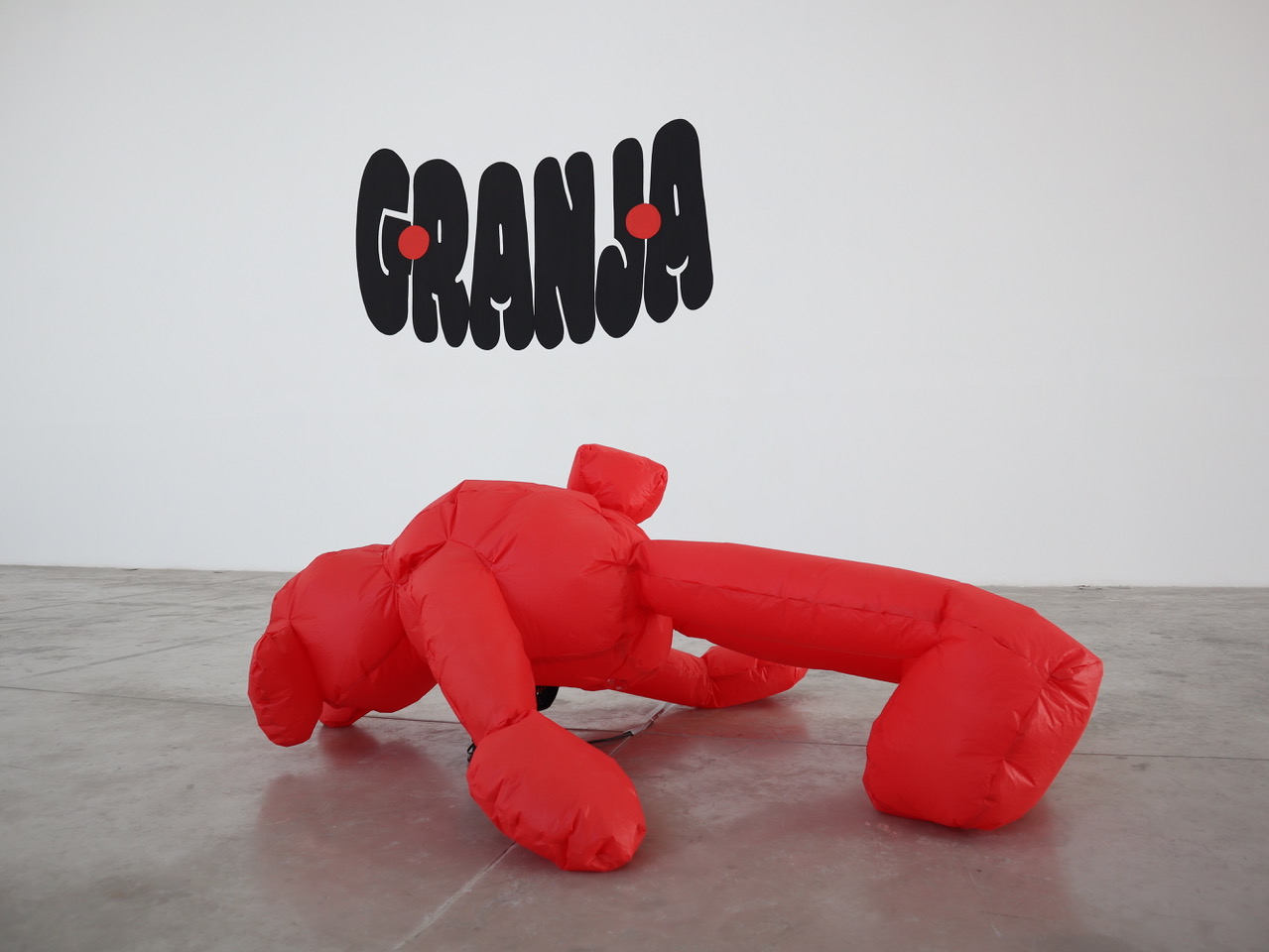
At the center of worship and congregation spaces, the new icons and idols took the form of tropicalized figures. Constructed with tablecloth plastic and using air as a material, the works present imperfections in their cuts and joints while showing the skill, ingenuity and humorous potential of adding or removing elements that a licensed collectible would not have.
Inscribing themselves in the genealogy of monumental sculpture in Art History, the artists reappropriate strategies from Jeff Koons' Balloon Dog series and anarchist architecture for shelters, highlighting formal attributes from limited resources.
Unlike advertising and holiday inflatables, these animals must remain in the exhibition space to preserve their integrity. Thus, GRANJA points out the inclemency of the elements, but also the conditions of captivity: the production systems and intensive management are institutionalized cruelty.
— MAZ