Interview
Headstrong Artists Sprout from the Desert: A Conversation with Curator Mayté Miranda on the Mexicali Art Week
by Josephine Dorr
Reading time
10 min
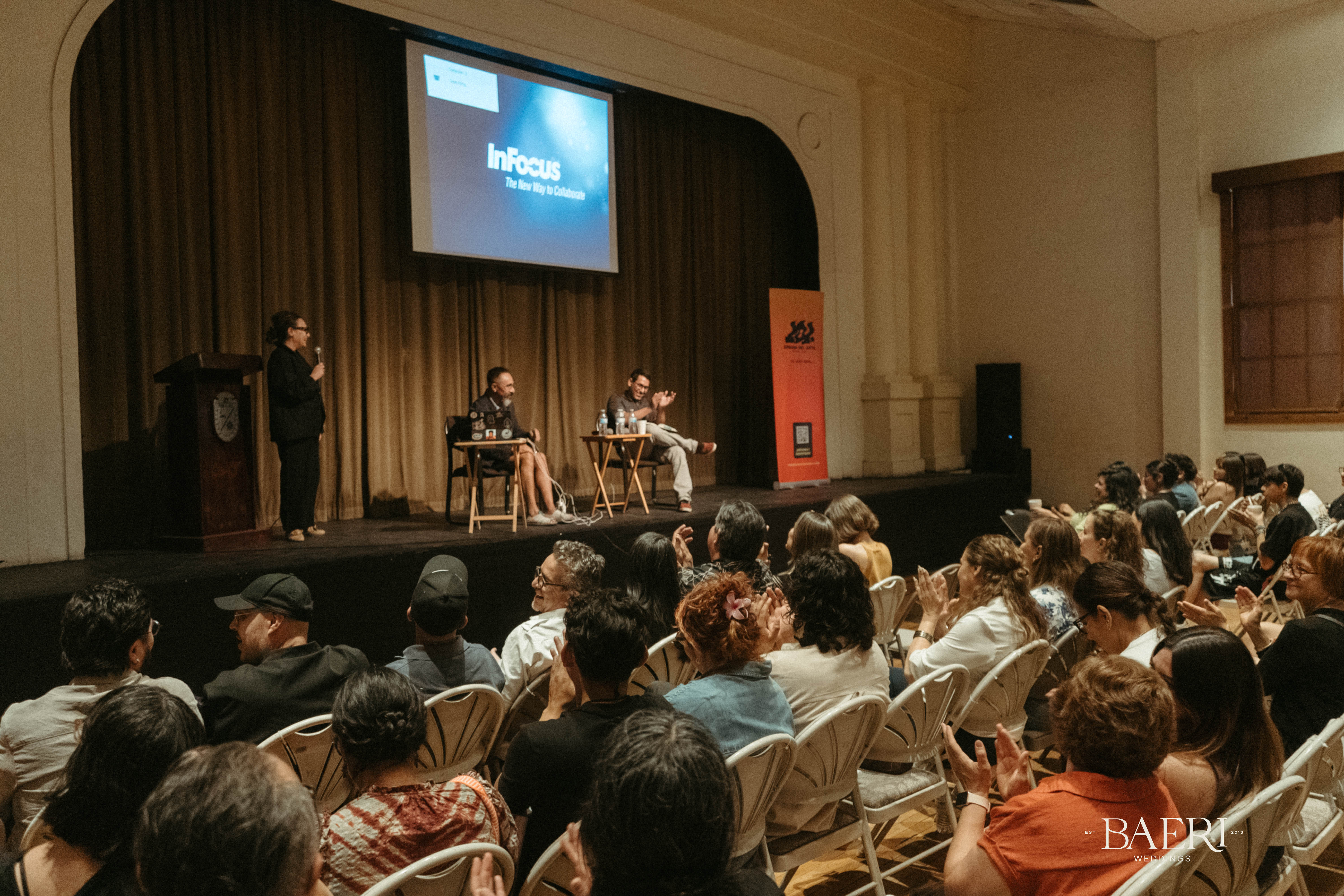
I had barely landed when the Semana del Arte Mexicali team invited me to try the city's signature cuisine: Chinese food. Seated with nearly twenty others—among them guests of the talks and workshops program, including writer Chris Kraus, artists Abraham Cruzvillegas and Ingrid Hernández, and curator Marielsa Castro—we tried to catch the dishes spinning quickly on a Lazy Susan at the center of the round table.
"Hot Hot Hot," repeated the event's seductive visual branding. Fortunately, there was no scorching heat, but there was art in a state of ebullition, and a particularly warm vibe.
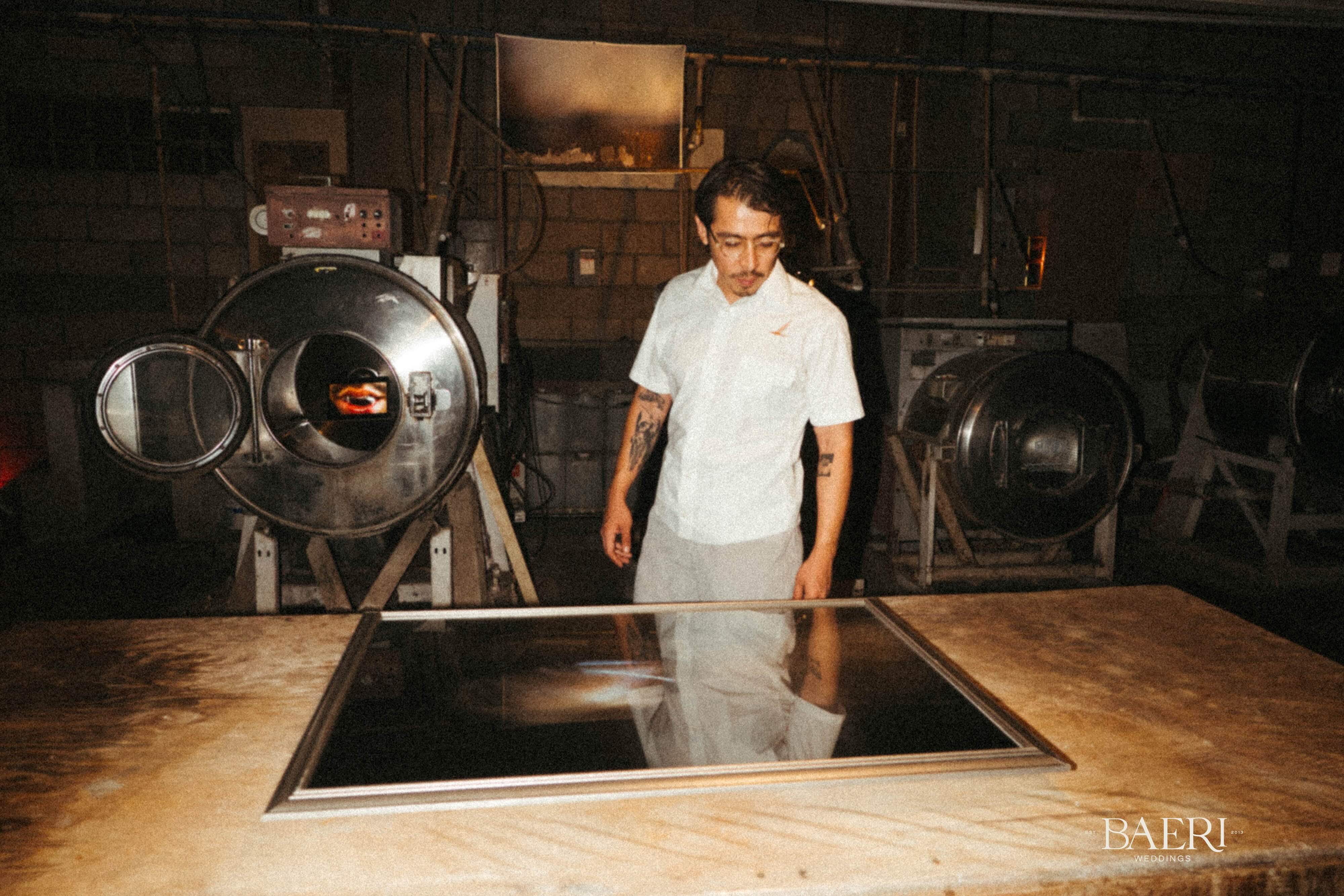
The open studios and exhibitions program offered different approaches to artistic production—not only from Mexicali, but from northern Baja California as well. A gathering at the home of Patty Fontes and Alonso Elías, who have assembled an extensive collection dedicated to the region's art, broadened that journey even further.
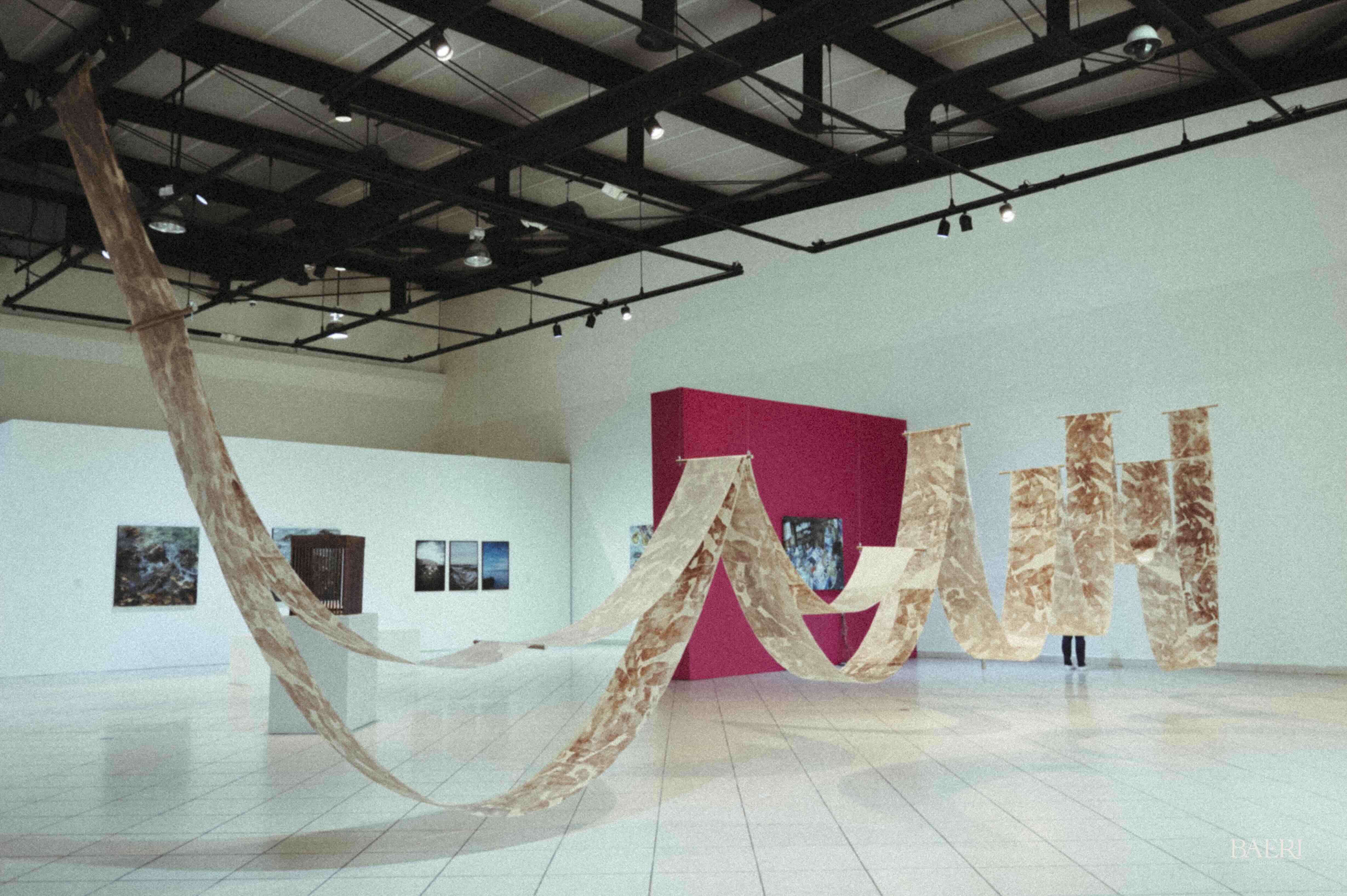
Among the concerns of Mexicali artists, recurring themes include water scarcity, the oppression of the Catholic Church, patriarchal violence, the failed promise of progress, the consequences of living on the border, and tenderness and community as tools for navigating these challenges. A strong attachment to the pictorial is evident. Nevertheless, as could be seen in 51 Grados, a survey of the local emerging scene presented at Taller de Arte Cero/Cero, artists experiment with a wide range of techniques and materials.
After spending three days by her side, I spoke with Mayté Miranda, a key figure for understanding Mexicali's current art scene. Mayté is an artist and curator. She is part of the Archivo Familiar del Río Colorado and currently serves as curator of the independent space Planta Libre. She organized the first edition of Mexicali Art Week (101 grados) alongside Sofía Hernández Chong Cuy, Diana Jiménez, and Minoru Kiyota.
Josephine Dorr: Why did Mexicali need an Art Week?
Mayté Miranda: At the start, we hadn't necessarily thought of an Art Week—that was decided after having a conversation with various cultural agents and artists. The questions were: what did the city's artistic community need, and what did it desire? What they pointed to, above all, was a lack of external recognition. Another thing that came up was a lack of feedback. And perhaps here I'll speak to what interests me personally: a professionalization of spaces and artists, beginning to propose that things happen with a certain structure. Seeing the work of artists, arts administrators, and curators dignified.
So we felt that the arrival of people from outside who could build relationships with people here was important—trying to keep the circuits from being so insular, without taking the spotlight away from the Mexicali art community. The Art Week was definitely a catalyst for more exhibitions, more activities. And the goal of building a bridge to the outside world was achieved. For example, the dialogue that Abraham [Cruzvillegas] and Teresa [Margolles] opened with many artists here was incredible.
What I keep thinking about is how to make the scene activate more regularly, how to build a habit—for instance, having more open studios throughout the year. There are elements I want to see change, and many others I don't. The lack of referents also produces very genuine things, and not having to answer to a market. I think there's something valuable in that integrity—without sacrificing the fact that your work deserves justice, that you get fairly compensated, that you can sustain your practice without precarity, and so on. I think another one of our goals was to promote sales, to bring in new audiences interested in buying, because there are many people in Mexicali who can pay ten or twenty thousand pesos for a piece. The problem is that in a border city like this one, where there are no art museums, and where American aspirationalism takes priority, people don't spend money on art. So the opinion that matters is that of your peers. Artists and curators are middle-class people who participate in many outside activities—they have office jobs, they teach, and so on. It's not elitist, and I like that. I see enormous value in the practices that exist here, in Mexicali.
JD: How do you explain this large number of artists in a context where the market is almost nonexistent? What sustains this creative energy?
MM: If I had to name one thing, I think it would be boredom. There's another very peculiar case I love: our neighbor San Luis Río Colorado, a city so small that if you stand in the middle of any street you can see the horizon. There's an incredibly fierce noise and experimental music scene there. Before the pandemic, artist Ramón Saturnino would put together installations at events and huge crowds of young people would show up. For me, something similar happens in Mexicali: boredom, first of all, and community. I think artistic circuits are built out of affection and comrades—that mobilizes a lot. The desire for things to happen is stronger than the difficulties, whether the climate or anything else.
JD: What practices or languages are particularly present in local artistic production?
MM: Definitely painting. There are also many ceramicists, because Mexicali is practically all clay from the river, but their presence in the art scene isn't very strong. I saw the generation around Pastizal Zamudio experimenting a lot with ephemeral materials—for a moment there was an exploration in that Lucy Lippard vein, very Bikini Wax. But I think before and after that, everyone went back to painting. Right now I see many young artists experimenting with fabric, though I feel that happened globally. Dimensionality is being exercised more in the works shown at the Baja California Biennial—new presences are felt. On the other hand, I think in Mexicali the music and visual arts scenes are crossing over. That was more common in Luis G. Hernández's generation, but now it shows up, for instance, in Adrián Pereda Vidal's sound art practice.
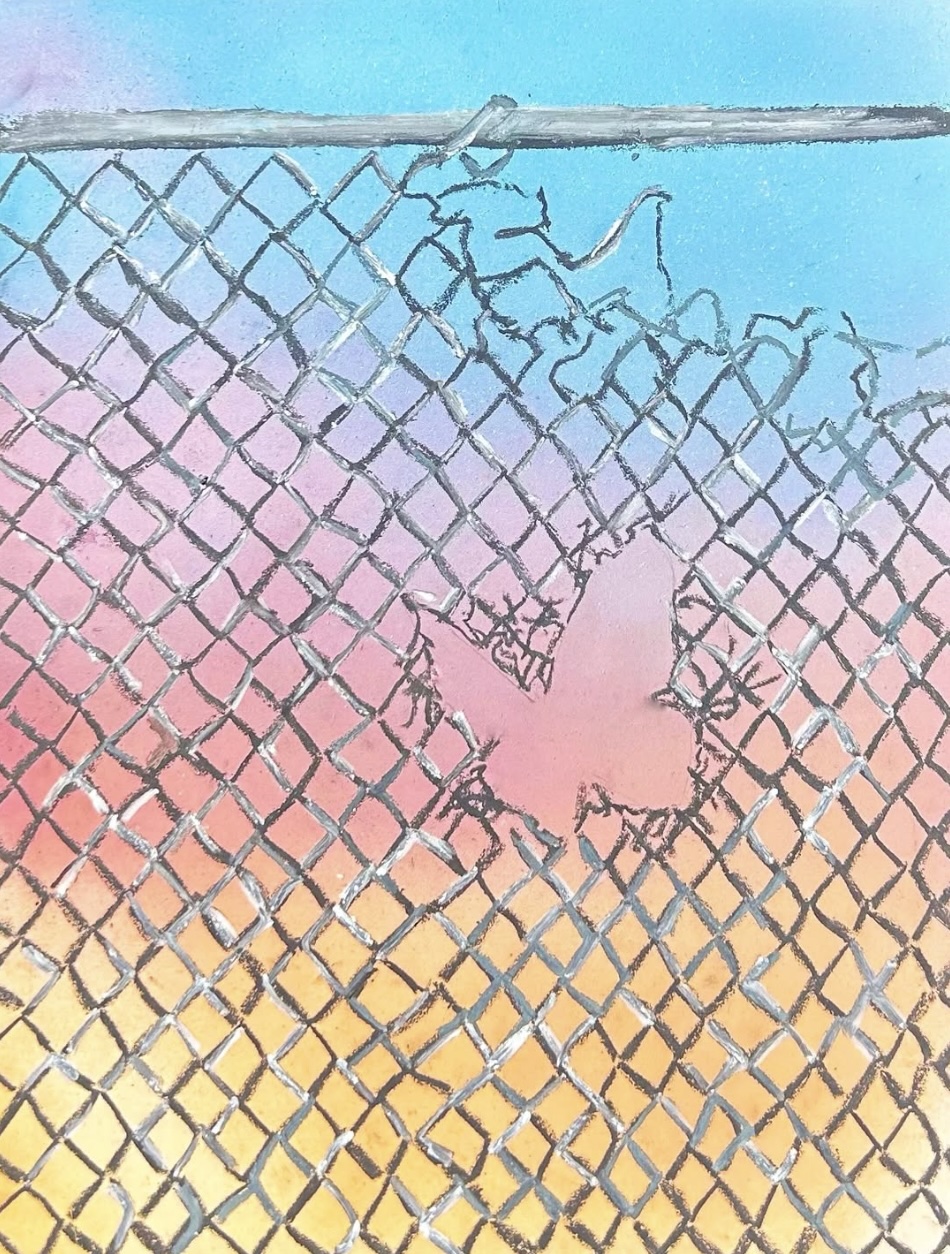
JD: The border wall that runs alongside Calexico is a constant part of the urban landscape. In your view, how does the border condition influence artistic practices and their circulation?
MM: I think Mexicali has a very different relationship to the border than, say, Tijuana—a city for which it was easy for a moment to establish a solid art circuit, partly because of Insite¹ and also because of having a very large city right next door: San Diego. In Mexicali, our connection to the US runs more through Los Angeles, via the MexiCali Biennial². I think our relationship to the border is much more silent, because there's no real connection with Calexico. After Pastizal did this project through Insite (2022–2025)³, at the invitation of Andrea Torreblanca, the conversation about border art opened up considerably—how the border presence is perceived in Mexicali. But here the border isn't talked about as a critique of the violent metal structure; it's something much more introspective. Migration is spoken about without necessarily speaking about the border. I think Miranda Varo is one of the persons who has historically represented the border most, and I don't even feel she does it the same way it's done in Tijuana—she does it in a much more poetic way, I think, and occasionally with humor: she has this incredible image of the border with the Teletubbies sun, and instead of the baby's face, it's Trump's face. Or for example, Omaris Molina⁴ [who participated in the closing performance of Mexicali Art Week] and Pilo Aceves had this project called Agrogonía: an audiovisual record of the landscape in the Mexicali Valley addressing pollution, water scarcity, and the presence of drug trafficking. Pilo made a series of videos with performances by Omaris and also photographs of trash, drought, and so on. And from Planta Libre we brought that to Salón Acme (2023). That kind of practice is relevant to me because talking about drug trafficking is also talking about the border, about northern Mexico. Talking about water scarcity in the Colorado River is also a border issue, because we receive water from there through a binational agreement. So the border doesn't take center stage in a literal way, but it's implicit in the subject matter—more through its consequences.
As for the scene's connections outward: Chris Kraus, for instance, writes in her book Where Art Belong about the moment she arrives at Mexicali Rose⁵. A New York space then invited her to curate an exhibition, and she chose to invite Marco Vera. Toward the center of the country, though, it's been harder. Many artists leave for Mexico City, Tijuana, or Guadalajara. What's missing are critics, curators, figures who can make connections so that local artists can show outside the city.
JD: What would you like to see happen in the coming years?
MM: The emergence of those figures who help with professionalization, and definitely the documentation of art history in Mexicali, and the formation of a market.
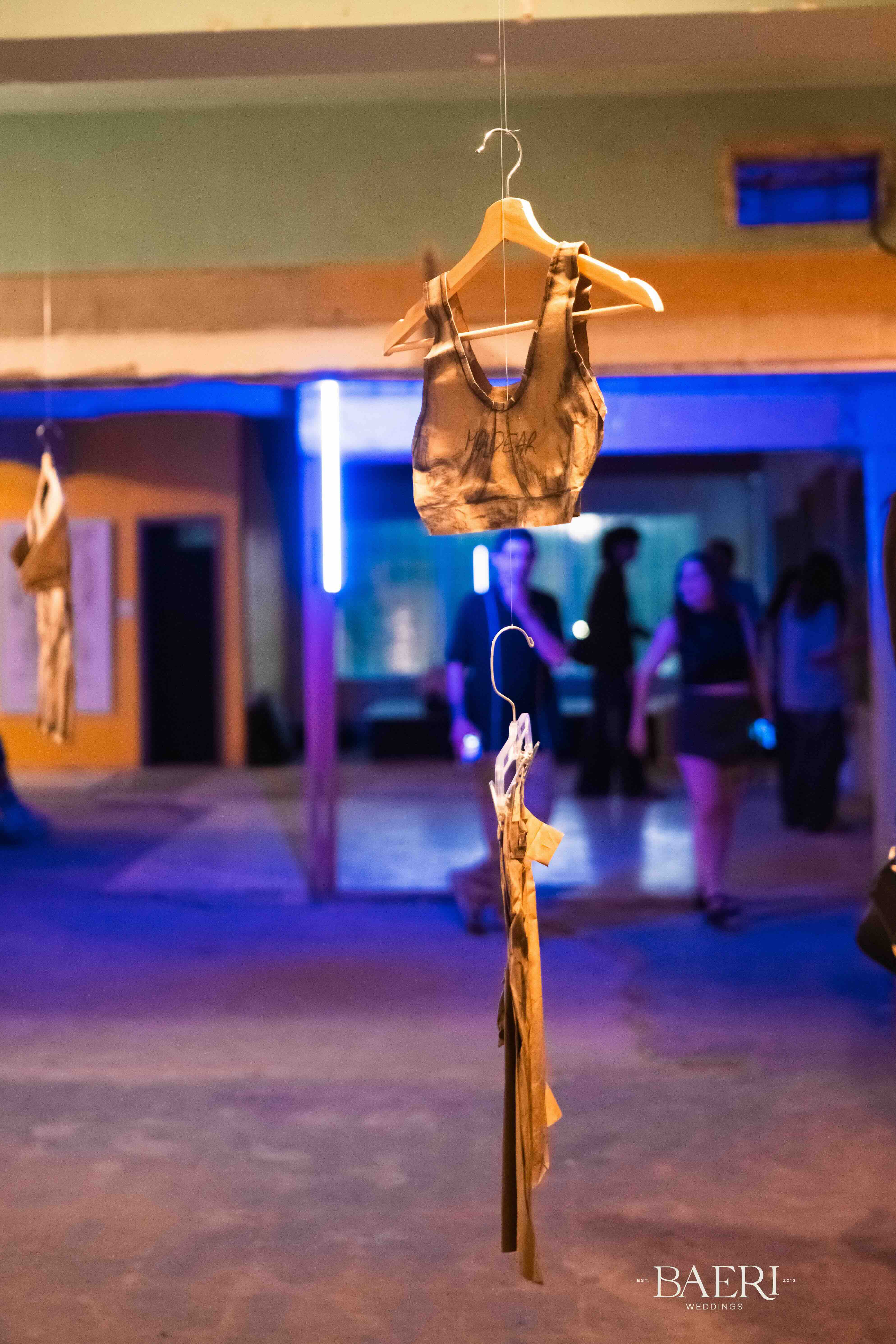
It may sound romantic, but what I found fascinating in Mexicali was seeing how so many incredible artists sprout from the desert—out of stubborn persistence. Among the Mexicali artists whose work I encountered that week, I would like to highlight the young Annia Monroy and Mauricio Tapia López, as well as Luz Yaneli Montiel and Hugo Fermé, whose exhibitions⁶ I found particularly compelling. I venture to say that these people embody an expression Alejandro Espinoza used in a panel discussion⁷ to characterize the people of Mexicali: "somos tiernos y salvajes"—"we are tender and wild."
Translated into English by Luis Sokol
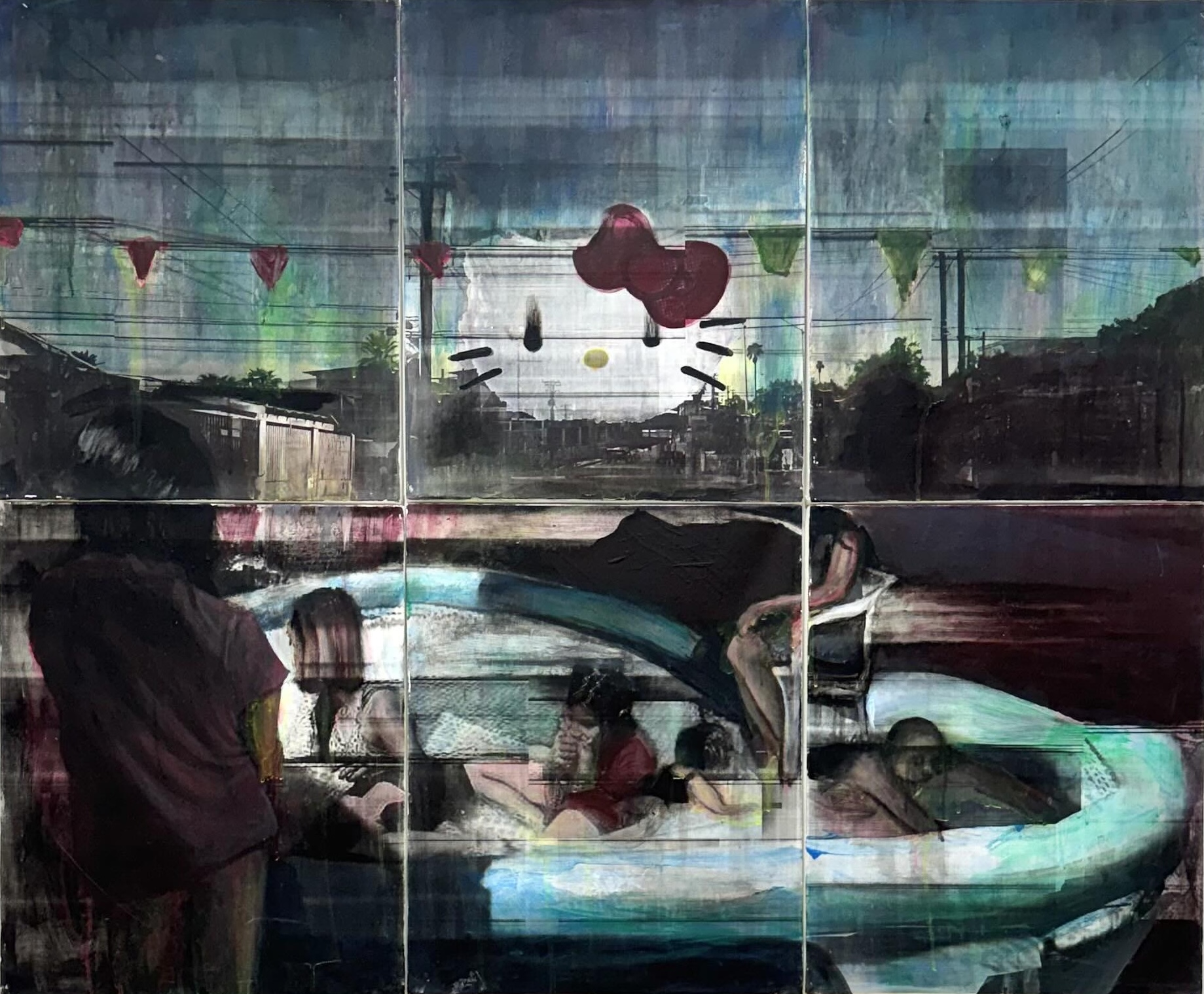
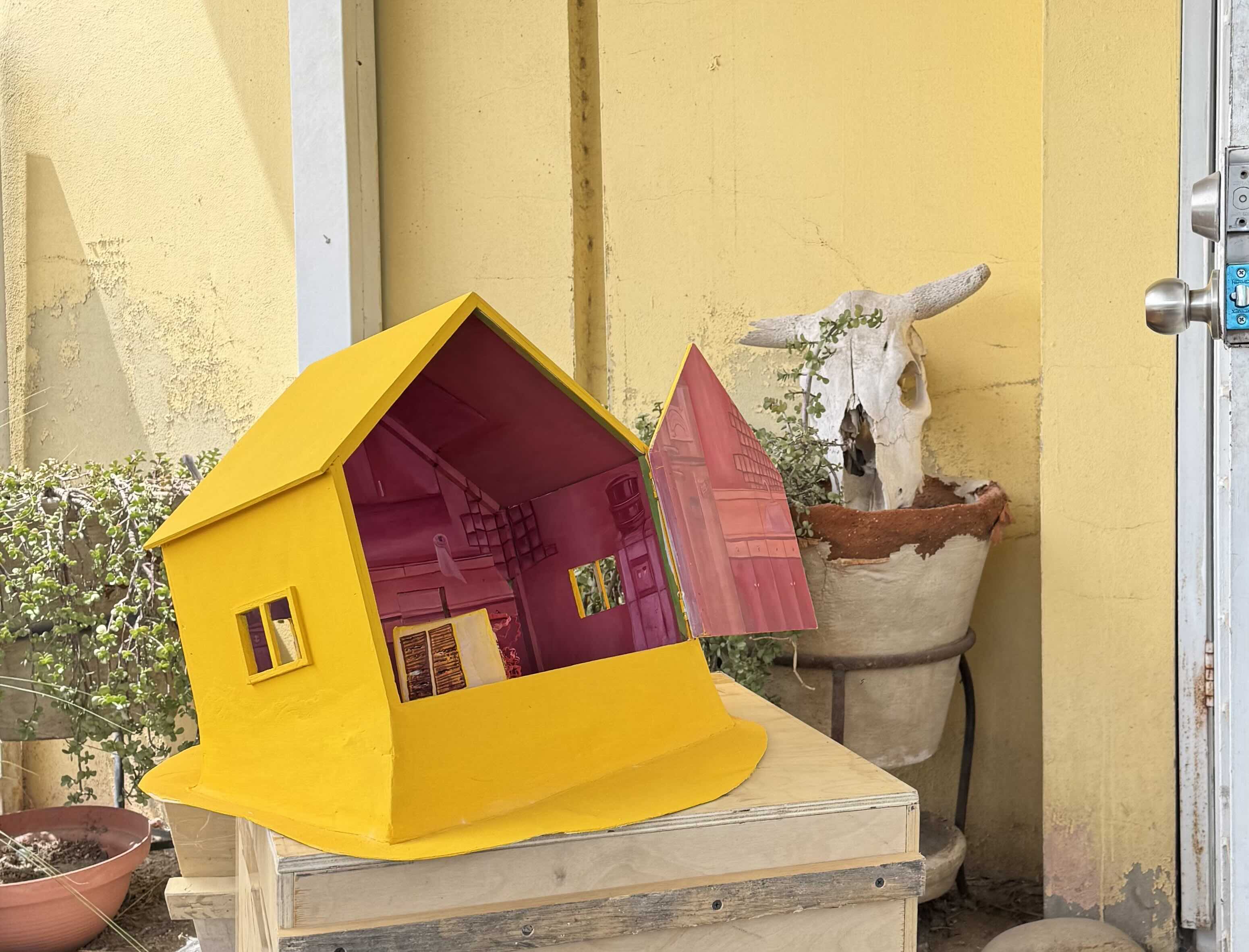
Cover picture: Work by Paula García. Photograph: Josephine Dorr
1: Founded in 1992, INSITE develops curatorial projects, artist commissions, publications, conversations, and initiatives through collaborations among artists, cultural agents, institutions, and communities, rooted in the notion of the public as well as the civic and social sphere.
2: The MexiCali Biennial is a binational arts organization founded in 2006 by Luis Hernández and Ed Gómez that explores the California-Mexico region as a singular site for aesthetic production. The biennial presents nomadic exhibitions in partnership with institutions to showcase emerging and established artists.
3: Más información sobre el proyecto en https://insiteart.org/people/torreblanca-andrea-1
4: Dancer, performer, and teacher Omaris Molina comes from the current and style developed by Rosita Gómez (1982–2025), co-founder alongside Luis Ongay (1979–2014) of SinLuna Danza Punk, a dance company of great importance in Mexicali.
5: Founded by Mexicali filmmaker Marco Vera in 2007 as an audiovisual workshop for children from the Pueblo Nuevo neighborhood bordering the border wall, the project expanded to include craft and trade workshops, a community gallery dedicated to exhibiting the work of local and international artists, a film club presenting works by Mexican and international filmmakers, and a radio station created to offer a free, uncensored platform for local youth.
6: More information about these exhibitions at https://semanadelartemexicali.com/evento/mientras-crece-el-silencio/ and https://semanadelartemexicali.com/evento/hugo-ferme-flujo-fantasma/
7: I refer to the panel discussion La historia secreta de las artes visuales en Mexicali (The Secret History of Visual Arts in Mexicali), held with Alejandro Espinoza, Luis G. Hernández, Mayté Miranda, and Israel Ortega at La Joyita on April 18, 2026.
Published on May 16 2026