Aquí nos hacemos bolas
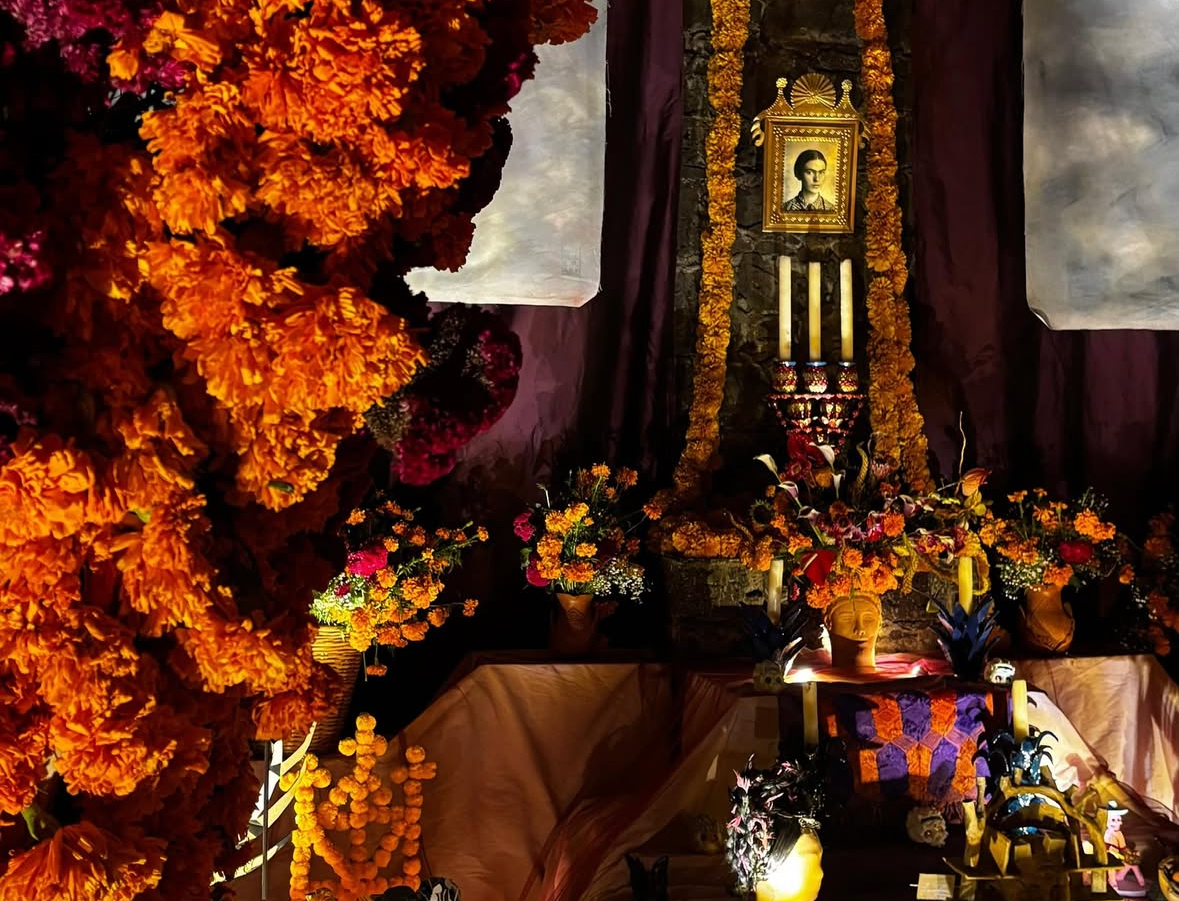
Altar dedicated to Frida Kahlo y Rosa Rolanda
Exhibition
-> Oct 29 2025 – Nov 30 2025
Every year, the Diego Rivera Anahuacalli Museum honors life, memory, and art through an altar that has become one of the museum’s most cherished traditions. During this Day of the Dead season, the Anahuacalli presents Aquí nos hacemos bolas, a project that celebrates friendship, transformation, and resilience through a dual altar dedicated to Frida Kahlo and Rosa Rolanda—two women who shared the same era, a profound artistic sensibility, and an enduring fascination with Mexico.
The altar will be open to visitors beginning October 29, 2025, at the Diego Rivera Anahuacalli Museum. For over seventy years, the Anahuacalli has presented altars dedicated to different figures and themes that honor the memory, art, and legacy of Diego Rivera and Frida Kahlo, as well as the Mexican traditions and roots they both deeply valued. Although at times this practice was paused, its spirit remains alive, strengthening the bond between art, memory, and popular tradition.
In this edition, the altar is dedicated to two women artists who regarded one another with affection and respect. The choice of Frida Kahlo and Rosa Rolanda responds to multiple symbolic affinities: both explored their identity through art, both underwent profound personal transformations, and both made Mexican culture a mirror of themselves.
This dual altar also commemorates the 100th anniversary of Frida Kahlo’s accident—an event that redefined her life and work. From that moment on, Kahlo began a continuous process of renewal that shaped her artistic trajectory and her way of inhabiting the world.
Rosa Rolanda—born Rosemonde Cowan Ruelas in Los Angeles in 1895—was a dancer, choreographer, designer, photographer, and painter who arrived in Mexico in 1926 with her partner, Miguel Covarrubias. Having performed on Broadway stages and in European theaters, she adopted various stage names and reinvented herself across multiple disciplines. Her work, deeply influenced by the Mexican environment, portrayed women, dances, and popular traditions through a unique visual language and a modern gaze.
Both artists were women who defied their time—Frida through painting and the affirmation of her identity, Rosa through dance and image. The offering that unites them this year speaks of that shared metamorphosis, of their capacity for reinvention, and of the way both integrated fragility and strength into their artistic practice.
Aquí nos hacemos bolas is a popular Mexican expression that means “to get tangled up” or “to get mixed up,” but it also suggests togetherness. Used by Frida in one of her letters, the phrase becomes, in the context of this offering, a metaphor for the convergence of paths, disciplines, and emotions that Frida and Rosa shared: life, art, pain, humor, and the celebration of the everyday.
The two altars, installed by the Anahuacalli Museum team under the direction of Karla Niño de Rivera—museum curator and author of the offering—enter into dialogue through symbolic references evoking the creative processes of both artists. Among flowers, candles, and papel picado, visitors will find allusions to dance and color, photography, painting, and the transformations that shaped the lives of these two women.
Access to the exhibition is included with general museum admission. Visiting hours are Tuesday through Sunday, from 11:00 a.m. to 5:30 p.m.
— Museo Anahuacalli