JoCa
Non finito
Exhibition
-> May 23 – Aug 30
Museo de la Ciudad de Mérida
JoCa presents Non finito at the Museo de la Ciudad de Mérida. The exhibition, curated by Rafael Pérez y Pérez, brings together 30 works that explore the construction of identity.
Contemporary portraiture has evolved from mere physical representation to a complex exploration of identity, subjectivity, and emotion, moving away from the traditional binary (representation-resemblance), where emotional charge, psychological analysis of the subject, and the artist's freedom allow for the construction of their own discourse within this pictorial genre.
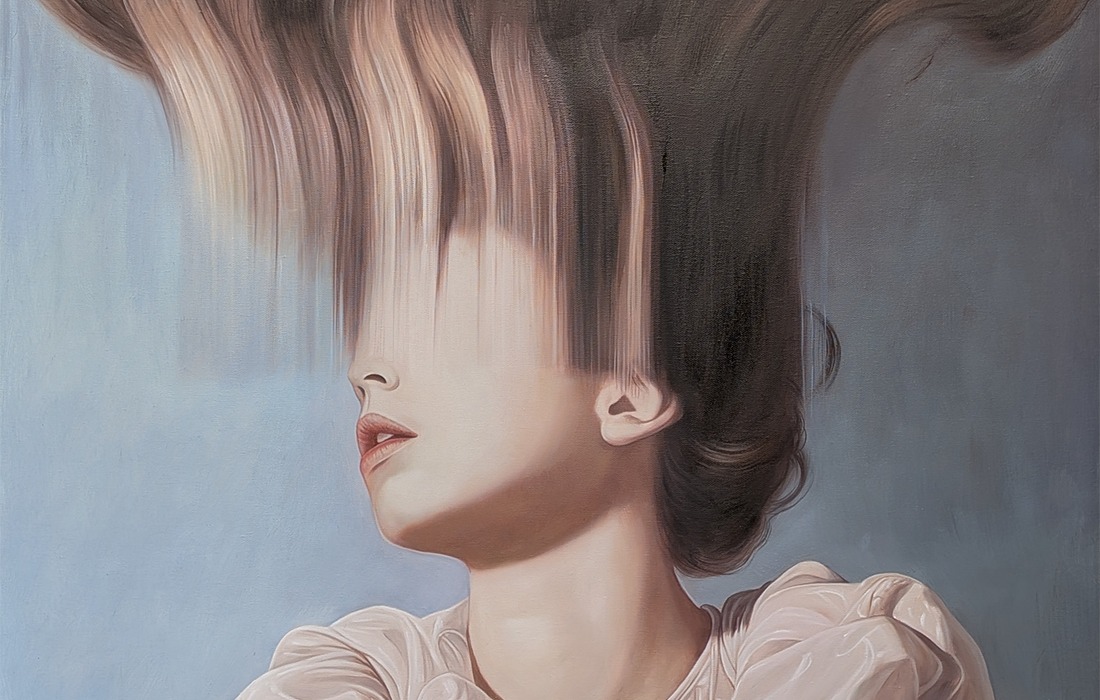
JoCa’s work is based on an artistic and aesthetic concept that describes works left unfinished (non finito) or intervened through pictorial discharges as an intentional way of creating the portrait, in which he deconstructs the image to grant it a sense of time—that is, he captures movement and energy through visual techniques such as speed lines, apparent blurring, or the partial concealment of the face.
The word portrait comes from the Latin retractus, the participle of the verb retrahere (to pull back or bring back), meaning to bring back or bring to light again, referring to the action of reviving, representing, or capturing someone’s image or personality. The name under which the body of work in this exhibition is gathered, Non finito, refers to the Renaissance technique describing works intentionally left unfinished, and in which the image is deconstructed to offer a vision of time—allowing us to approach creative postmodernity, where figuration, applied to the portrait genre, regains its relevance and contemporaneity.
Thus, JoCa perceives formal characteristics by placing emotionality above the portrayed identity. Therefore, the production is never exact to reality, but can create sensations of reality or simulate it; this intervention or cancellation of the image grants an iconicity to the portrait, causing the work to merge concept with pictorial representation within what we might consider the new plastic figuration.
The representational characteristics of the portrayed subject are filtered through images with a certain level of iconicity, in which the deformation created through the aforementioned techniques (non finito, pictorial discharges, and décollage) must be understood as an expressive and conceptual intention, not merely as genre and language.
—Rafael Alfonso Pérez y Pérez